Showing posts with label USA. Show all posts

Tuesday, 15 December 2015

Disney star travels with olive oil & chocolate?

By Jennifer Grubb


2013 is starting with a bang for Disney star Bridgit Mendler. The fourth season of her Disney Channel show “Good Luck Charlie” is in production and her song “Ready or Not” from her debut album “Hello My Name Is…” just broke through the top 50 of Billboard’s all-genre Hot 100 singles list. As if that wasn’t enough, the 20 year-old is also a new student at the University of Southern California.


Her demanding schedule requires frequent travel, so the Los Angeles resident does her best to stay healthy by getting seven hours of sleep, eating well, and stocking up on tea. “Whenever my voice is feeling hoarse, I just guzzle down some tea,” Bridgit says. “That usually helps a bit and if not that, believe it or not, I have a little spoonful of olive oil.” She confesses she’s a bit of a procrastinator when it comes to packing and never leaves home without dark chocolate.


Despite her hectic schedule, Bridgit likes being on the road. “I really enjoy the new experiences and meeting new people, but I have to say I'm a homebody so I’m always excited to be back home,” she admits.

But alas, the road is calling again. Bridgit will soon be heading to New York City, where she’ll perform at a charity concert for UNICEF hosted by fellow Disney star Selena Gomez on Saturday January 19th.

Visit her website: bridgitmendlermusic.com for more information.

[Source: HLNtv.com]

Thursday, 3 December 2015

U.S. International Trade Commission investigates the olive oil industry

After a December public hearing, it's harder to understand the future of the US extra virgin olive oil market and the olive oil marketing order. Testimony of some key witnesses will provides a clearer idea

by Alberto Grimelli

Some months ago the U.S. International Trade Commission (USITC) has launched an investigation into the global competitiveness of the U.S. commercial olive oil industry.


The investigation, called “Olive Oil: Conditions of Competition between U.S. and Major Foreign Supplier Industries”, was requested by the U.S. House of Representatives Committee on Ways and Means in a letter of September 12, 2012.

In its letter, the Committee stated: "The U.S. commercial olive oil industry has grown rapidly over the last decade, employing modern agriculture technologies and research to capture the growing domestic demand for olive oil.... U.S. consumption of olive oil has increased approximately 40 percent in the past ten years. Although domestic production has increased, the vast majority of U.S. consumption is satisfied by imports."

As requested, the USITC, an independent, nonpartisan, factfinding federal agency, will provide, to the extent possible, information and analysis on the major suppliers of olive oil, particularly Spain, Italy, and North African countries, as well as the United States. The report will cover the period 2008-2012 and to the extent possible will provide:


- an overview of the commercial olive oil industry in the United States and major supplier countries, including production of olives for olive oil processing, planted acreage and new plantings, processing volumes, processing capacity, carry-over inventory, and consumption;

- information on the international market for olive oil, including U.S. and foreign supplier imports and exports of olive oil in its various forms, olive oil trade between the European Union and North African countries, and a history of the tariff treatment and classification of olive oil;

- a qualitative and, to the extent possible, quantitative assessment of the role of imports, standards and grading, prices, and other factors on olive oil consumption in the U.S. market; and

- a comparison of the competitive strengths and weaknesses of the commercial olive production and olive oil processing industries in the major producing countries and the United States, including factors such as industry structure, input production costs and availability, processing technology, product innovation, government support and other government intervention, exchange rates, and marketing regimes, plus steps each respective industry is taking to increase its competitiveness.

The USITC will submit its report to the Committee by August 12, 2013.

On December 5, 2012, the USITC held a public hearing in connection with this investigation on December 5, 2012. What happened during this public hearing? The testimony of the witness will help us to understand.

“Fraud has plagued the olive oil business for thousands of years and continues to this day – said Tom Mueller, journalist and author of the book “extra Virginity” - olive oil quality, good and bad, is not matter of nationalism. Some extremely bad oil is made right here in the USA: my book describes several high profile American fraudsters. And much of world's finest olive oil is made by the Mediterranean, especialli in Spain, Italy and Greece. Americans consumers who buy these false extra virgins are being duped.”


“The Olive Center's three reports on olive oil quality – said Selina Wang, Research Director of the UC Davis Olive Center – have analyzed a total of 207 samples purchased from supermarkets and food service distributors. These studies found that 65% of the Mediterranean olive oil samples did not meet the IOC's minimal extra virgin standards, and that two of the samples were adulterated with canola oil. UC Davis conducted both IOC chemical and sensory analysis. The NAOOA's quality monitoring program does not include the IOC sensory standard.”

“Imports of olive oil account of the overwhelming majority – or about 98% - of growing US consumption - said Eryn Balch, Executive Vice President of NAOOA (North American Olive Oil Association) – NAOOA's ongoing mission is to ensure that imported olive oil is authentic and properly labeled. The common denominator in all of the NAOOA's efforts in this respect in the international standards overseen by the IOC. The problem is that conclusions of the UC Davis studies rely primarily on sensory testing, which of all the test methods is the one that is subjective and can produce variable results.”

“The process of adopting a federal marketing order is beneficial for both domestic producers and importers – said Alexander Ott, Executive Director of AOOPA (American Olive Oil Production Association) – If Europe's olive oil industry has benefited from an import quality regulation why shouldn't the US go ahead and protect the US consumer from both fraud and poor quality olive oil. To date there has not been a marketing order submitted or has one been drafted for submission so there is no marketing order entity that would have an interest in the farm bill. Yes, we are discussing a potential order with growers but the hysteria over potential federal marketing oderde is somewhat humorous.”


“The combination of a Mediterranean climate, productyion expertise, and entrepreneurial spirit provide the foundation for California to capitalize on the growing opportunities the market has to offer – said Mechel S. Paggi, Director Center for Agricultural Business, Califonia State University - Unlike their foreign competitors, California producers receive little government support in their effort to grow the industry.”

Fraud, olive oil quality, competition with European producers – these are the key problems, that the public hearing addressed. Who will win? Which side will prevail? No one knows at this point, but at least we now understand better who the players are in the competition: the NAOOA, which represents importers and distributors, and the AOOPA, representing growers and processors.

This is nothing new for Europeans. In fact, we’ve seen this competition every day, for decades. Good luck, USA, and welcome to the real world of the olive oil business!

[Source: Teatro Naturale International]

Tuesday, 1 December 2015

California olive oil industry ripe for expansion

By Robert Rodriguez

California’s burgeoning olive oil industry is expected to have a record-breaking year in 2015 as demand and acreage continue to grow.


This year, the state’s olive growers are estimated to churn out 4 million gallons of California extra virgin olive oil, nearly double the amount milled in 2014.

Much of the growth is coming from new, higher-yielding orchards that have been planted statewide, including in the central San Joaquin Valley. The region is now home to nearly a dozen companies crafting high-quality oils.

Even foreign growers have recognized California’s potential. Australia’s largest olive oil company, Boundary Bend, opened its first U.S. facility earlier this year in Woodland and has plans to expand over the next several years.

California’s olive industry leaders say that much of what sets the state’s 400 olive oil producers apart from their larger foreign competitors is quality.

While California has grown olives for decades, the trend now is to plant olive varieties specifically for their smooth and rich tasting oil. These days, the number of olive acres harvested for the cannery has dropped from a peak of 38,000 in the late 1970s to just 18,000 acres currently.

“Table olives are going the other direction,” said Adin Hester, president of the Oliver Growers Council in Visalia. “The numbers are up for olive oil production and it makes sense.”

The state’s olive oil estimate may not seem huge, compared to mega-crops like almonds and milk that produce in the billions of pounds or gallons, but it’s a big deal for the industry.

“We are growing by a percentage point a year and that is incredible considering we were just 1 percent of the total market in 2011 and now we are 4 percent,” said Patricia Darragh, executive director of the California Olive Oil Council in Berkeley. “The demand is growing.”

The olive oil council estimates the size of the state’s olive acreage at 35,000 with an additional 3,500 acres expected to be planted each year through 2020. California’s fourth year of drought also has made the drought-tolerant olive tree more attractive to some growers.

“Farmers are looking at their portfolios and trying to manage their water availability,” said Kimberly Houlding, executive director of the American Olive Oil Producers Association in Clovis. “So when you have a tree that takes half to one-third of the water of other tree crops, then olives begin to make sense.”

Although California represents just 4 percent of the market, with major imports coming from Italy, Spain and Tunisia, it has been quietly nibbling away at the importers’ dominance.

Helping to turn the tide was a landmark 2011 study done by the University of California that found the quality of some of the largest imported brands was inconsistent at best. It also found that most of the top-selling olive oils failed to meet international standards for extra virgin olive oil.

True extra virgin olive oil has to meet international standards for how it is stored and processed, meaning no chemicals or extreme heat is used during the extraction process and the oil is free of defects of flavor or odor, according to the California Olive Oil Council.

Among the Valley olive oil makers having success is Vincent Ricchiuti, whose family operates the award-winning Enzo Olive Oil. The family farms 400 acres of olives in Madera and may be planting more.

Working in California’s favor, Ricchiuti said, is its quality and strong consumer interest in local and U.S.-made products.

Enzo recently signed a deal to sell its organic extra virgin olive oil at more than 1,000 Publix grocery store chains. The Florida-based chain operates primarily in the southeast.


“When Publix brought us on we began to see new possibilities,” Ricchiuti said. “If we want to continue to grow our client list, we are going to have to plant some more acres. There is no question that people are becoming more aware of California extra virgin olive oil.”

To help remind consumers that there is a difference between California and imported oil, the California Olive Oil Council also certifies that its members’ oils are 100 percent extra virgin olive oil. The organization represents about 90 percent of the state’s 400 olive oil producers. The council’s certification process involves meeting or exceeding specific standards for acidity level and ultraviolet light absorbency. A blind panel taste test also looks for taste and odor defects.

“People are starting to see the quality of what we produce and it is only inevitable that there will be more growers and oil being produced, ” said Katrina Van Conant, co-founder of Scout Olive Oil in Clovis, one of the Valley’s newer oil makers.

As Australia’s largest olive oil producer, Boundary Bend wants to tap the U.S. demand for premium olive oil, especially oil from California. The U.S. is the world’s fourth-largest market for olive oil.

The company, whose flagship brand is the award-winning Cobram Estate, is spending more than $20 million on a mill, storage facility, laboratory and office in Woodland, just north of Sacramento. The company will be milling oil from California growers as it prepares to plant its own trees next spring.

Adam Englehardt, chief executive officer of Boundary Bend’s U.S. operation, said the plan is to plant 300 acres of olives a year over the next seven years.


“Consumers are wanting a higher quality, domestically produced oil, and we can provide that,” Englehardt said.

As part of the company’s growth plan, Boundary Bend is looking at building additional processing plants in other olive producing regions of the state, including the Valley. Englehardt said Boundary Bend has identified the Valley’s westside as an area of interest for new olive trees. The challenges are high land prices and the presence of a fungus known as verticillium.

“We have to be able to find land at a price point that is sustainable for this company,” Englehardt said. “But we are looking.”

[Source: The Fresno Bee]

Wednesday, 18 November 2015

Taste of Tuscany: Under the Olive Tree in Virginia offers gourmet oils and vinegars

By Martha M. Boltz

Tysons Corner Mall, just outside of Washington, DC in Virginia, is an over-crowded mecca of cookie-cutter stores, all looking alike, until you come upon this little bit of Italian culinary heaven.

On the lower level, basically between L.L. Bean and Nordstrom, stands the quaint little store, Under the Olive Tree, a gourmet cook’s delight with enough variety to suit the rest of us cooks as well.


Photo: An olive orchard in Umbria, Italy


Technically the shop bills itself as “a purveyor of Ultra Premium Extra Virgin Olive Oils and Balsamic Vinegars from around the world,” and a listing of them would exceed our word limit. Each oil is ready for tasting by turning the spigot of one of the large urns and letting a small sample to flow into a little paper cup.

Presided over by Marcel Beraud, his wife Fabiana and their lovely daughter, Marie Claire, the shop exudes a wonderful scent, a treat in itself as you wander around.

The oils come from various parts of the world such as Tunisia, Italy, Spain, Argentina, and more. On site at each plantation is a mill that starts the oil-making process from freshly picked green olives.

It’s a special process rapid enough to capture the freshest flavor as well as the highest quantity of health benefits. All olive oils are pressed cold and come from either natural or certified organic trees, producing the finest flavors.

Balsamic vinegars are also featured, with every flavor and concoction of tastes imaginable. My first selection was a dark chocolate flavored balsamic, which added a warm flavor to a salad caprese that is quite rewarding.

I also picked up a Chipotle EVOO, since spicy oil sounded delicious, and it was added to fresh pasta. The next visit I opted for a Basil EVOO, again a pleasing greenish taste.

In addition to the variety of oils and vinegars, a number of excellent pastas are available, all made in Virginia. I have a Red Pepper Fettuccine awaiting its taste test. For those who favor Mexican food and love chimichurri, small packets of a great chimichurri mix are available, which is spicy but very good.

There are other special spices presented with my personal favorite being a bottle of Black Truffle Sea Salt. While the tiny black flakes are easily seen, you have only to remove the top to catch the easily defined truffle flavor. A pinch of it in béchamel adds a definite spark!

Special tastings are frequent, usually on weekends. White Truffle Week started on January 11 will continue through Jan. 18 at 12:45 p.m.

Owner Beraud told me there are 24 flavors of balsamic vinegars, and 11 fused and infused EVOOs as well as four special oils, something for every palate.

When visiting Tysons Corner Mall, be sure to go down to the lower level and check out this relative newcomer inspired by the flavors of Tuscany. I guarantee you’ll be back for a return visit. The Berauds are friendly and helpful and the stock is outstanding. Their web site is found at www.undertheolivetree.net

Buono appetito!!

[Source: The Washington Times]

Thursday, 5 November 2015

New Neighbors: Carter & Cavero Old World Olive Oil Company

We had a few questions about this new store, and Carter & Cavero Old World Olive Oil Company was kind enough to take a few minutes to respond. Below are the responses.

1.) The cornerstone of your store is olive oil, clearly. Why olive oil? What’s so special?


In our travels, we had visited olive oil producing regions of the world where we tasted amazing extra-virgin olive oils. We realized how olive oil added incredible taste and goodness to any meal and our passion for olive oil grew out of these experiences. We wondered why it was so difficult to obtain these extraordinary extra-virgin olive oils in the U.S. Hence, our vision for Carter & Cavero was to create a place where people could taste these olive oils that we had come to love but which had not been available in this country until recently.

2.) The name of the store uses the words “old world’’ as a description. What do you mean by that?

Extra-virgin olive oil is the first, cold-pressed juice of the olive with no additives or heat applied during the milling process. Although today’s modern techniques and machinery have improved the quality of olive oil and made the milling process less labor intensive, the basic principles of cold pressing freshly picked olives to obtain fresh olive oil remain the same as they have been for thousands of years. We always seek out and strive to bring to our stores the freshest olive oils that are produced in a manner consistent with these “Old World” traditions.

3.) What makes this store unique?


We are a tasting store that specializes in extra-virgin olive oils and balsamic vinegars from around the world. Our stores are interactive, educational and fun. When a customer first enters one of our stores, an associate is there to guide the customer through the varieties of olive oils and balsamic vinegars. Many of our products, such as our handmade ceramics from Spain are sold only in our stores here in the U.S. Sharing this experience with our customers is what makes us unique and interesting.

4.) Do your customers, or potential customers, have access to your store, to peruse or purchase online and do you use any social media?

We have an online store where people can purchase our products and have them shipped to their homes. We are active users of social media such as Twitter and Facebook. Guests can also visit our website to sign up for our newsletter that keeps them abreast of new recipes, events and sales. Our webstore is also a great place for businesses to shop for corporate gifts and a place for brides to shop for olive oil and vinegar wedding favors. We were recently voted Best of Weddings 2013 by the Knot, the internet's most-trafficked wedding planning website.

5.) When considering a location for the store, why did you choose Wall Township?

Wall Township lies in a part of Monmouth County that’s very near and dear to the Carter & Cavero families. Two of the owners were born and raised within walking distance of our Sea Girt Square store. Wall Township is an ideal place for people that live in the area and for those who love to visit the Jersey Shore. We could not think of a better location than Wall Township.

Carter & Cavero Old World Olive Oil Company
Manager: Barbara Guerra
Address: 2100 Hwy 35, Wall, NJ 08750
Hours: Monday, Tuesday, Wednesday & Friday: 10 a.m. to 6 p.m.
Thursday: 10 a.m. to 7 p.m. Saturday: 10 a.m. to 5 p.m.
Sunday: 11 a.m. to 5 p.m.
Phone: (732) 449-0044
Email: info@carterandcavero.com
Website: www.carterandcavero.com
Facebook/Twitter/social media: facebook.com/carterandcavero ; twitter.com/CARTERANDCAVERO

[Source: Wall Patch]

Wednesday, 4 November 2015

Saratoga Olive Oil Co. garners honors


The Olive Oil Times has named Saratoga Olive Oil Co. in Saratoga Springs one of five olive oil shops with a great selection.


“This shop prides itself on educating the public about olive oil. Presented with an impressive variety of olive oils from around the world, the customer is encouraged to taste different styles before purchasing,” Denise Johnson, Olive Oil Times contributor, wrote. “The shop is adorned with beautiful thoroughbred racetrack paintings to reflect the history of Saratoga.”


The other four stores Johnson reviewed are in New York City, France and Spain, making the family-owned Saratoga shop honored internationally.

Owned and operated by Clint, Barbara and Chad Braidwood, the Broadway store offers flavored olive oils, gourmet oils, white and red balsamic condimento vinegars, sea salts, local bread and crackers and beauty products.

Find out more about the shop at www.saratogaoliveoil.com.

[Source: The Saratogian]

Friday, 9 October 2015

ULM professor awarded more than $420,000 to develop olive-based cancer inhibitor

The National Institutes of Health awarded Khalid El Sayed, associate professor of pharmacy at the University of Louisiana at Monroe, $420,520 for his research project, “Design of novel c-Met inhibitors inspired by olive phenolics.”


Khalid El Sayed, associate professor of pharmacy at the University of Louisiana at Monroe, was awarded $420,520 for his cancer-related research project. / University of Louisiana at Monroe


ULM President Nick Bruno said, “I am very proud of Dr. El Sayed and what he has accomplished thus far. The continuation of these kinds of grants will further build his reputation as a researcher. This also signifies the importance of our College of Pharmacy and its relevance to the state, the region and the university as a whole.”

The research project will use a natural compound found in extra virgin olive oil and other related natural compounds as possible dietary supplements to control breast cancer and to enhance the therapeutic effects of current anticancer drugs.

"Dr. El Sayed continues to have success in the area of cancer therapeutics discovery and development from natural products," said Benny Blaylock, Dean of the College of Pharmacy. "The information from this research will add important information for use in both treatment and prevention of breast and prostate cancer. The College of Pharmacy is very proud of the research being done by Dr. El Sayed and other members of the Department of Basic Pharmaceutical Sciences."

The research is derived from studies focused on the eating habits and disease occurrence of those living in the Mediterranean, El Sayed said.

“Nature is still the single most important drug source,” said El Sayed. "About 75 percent of today’s anticancer drugs are natural products or based on natural origin. The Mediterranean diet includes extensive use of olive oil in its ingredients, which correlates to lower incidences of cardiovascular disease, age-related cognitive disease and cancer.”

The project also includes the use of computer software to make new synthetic compounds similar to the olive-derived compounds. The synthetic compounds will have significant improvement in anticancer activity, El Sayed said.

“These compounds showed activity against several metastatic prostate and breast cancers,” said El Sayed. “The proposed research will develop novel c-Met—an important enzyme for several metastatic tumor types—and cancer inhibitors for future pre-clinical and clinical studies.”

El Sayed explained his expectations for the project. “Our long-term goal is to utilize the ability of olive oil to inhibit the activation of the c-Met enzyme and use it as a dietary supplement to synergize the effects of chemotherapeutics.”

El Sayed continued, “This project would not have been successful without the thoughtful contribution, support and hard work of collaborators and graduate students from the ULM College of Pharmacy. Faculty members of the ULM College of Pharmacy believe they have the talent, persistence, skills, experience, and knowledge to achieve the establishment of a 'Louisiana Drug Discovery Center' in collaboration with other Louisiana institutions. This success is a step forward towards this direction.”

While at ULM, El Sayed has received $1,180,000 in research support from Louisiana Biomedical Research Network, Philip Morris, the American Society of Pharmacognosy, the American Foundation for Pharmaceutical Education, and several small companies. He has also received $278,000 from the Louisiana Board of Regents for equipment funding. In collaboration with his pharmacy colleagues, El Sayed has been awarded three U.S. patents for cancer research. He has taught at ULM since 2001.

[Source: The News Star]

Monday, 5 October 2015

Herb-infused olive oil: Tasty and easy to make

By: George Noleff, newsnet5.com

CLEVELAND - It is the middle of winter. The skies are gray. It is cold. There is snow on the ground. You need a break. You might not be able to travel to a sun-drenched, happy place, but you can create one in your kitchen. All you need are a few basic ingredients and a taste for the Mediterranean to make herb-infused olive oil at home.

What you will need:

1 Quart Extra Virgin Olive Oil


Few Ounces Dried Herbs (Any herb or combination of herbs you prefer like oregano, rosemary, thyme, etc.), preferably on the stem

That is it. Not a long ingredient list, right?

To start, pour your oil into a medium saucepan. Gently heat the oil, but be careful not to heat it above 115 degrees F. Place half of your herbs in the oil. Immediately turn off the heat and let the herbs steep for at least 20 minutes.

Next, strain the oil through a fine sieve and into a container. You can use any spare bottle, jar, or even plastic container. Then, add the rest of your herbs to the oil, and cork it or close it.

The longer you wait to use your infused oil, the more intense the herb flavor will be. One note of caution, make sure you use only dried herbs. Fresh herbs hold water, and water can harbor botulism and other bacteria. The same goes for garlic, lemon, and other fresh vegetables and fruits.

If you do want to add those, keep the oil refrigerated and use it within a week.

Need some ideas for how to use the oil?


Of course, you can use it to make dressings and vinaigrettes. You can also use it as a bread dip. It is also great on toast or crostini. Just sprinkle a little on a slice of bread and put it under the broiler or in the toaster oven. Use it to cook with. It will add zest to scrambled eggs. Toss it with a little parmesan cheese and pasta. Use it as a finishing sauce on roasted meat, chicken, and fish. There are plenty of ways to use it, and to add a little Mediterranean summer to your winter.

[Source: News Channel 5]

Wednesday, 23 September 2015

Custom olive oil and balsamic vinegar creations dazzle at downtown specialty store

By KRISTIN FARLEY

KNOXVILLE (WATE) - A unique shop with its own tasting bar is taking off in downtown Knoxville.


But we're not talking wine tasting. Instead, olive oil and balsamic vinegar are on tap, so customers can make and take home their own creations.

"Our philosophy is to bring high-quality ingredients that don't take a lot of preparation to the table to make the most boring food taste yummy and healthy," said Terri Karlsson, owner of The Tree and Vine.

Karlsson and her husband Paul opened The Tree and Vine on Union Avenue six months ago. Their main staples are estate olive oil and aged balsamic vinegar.


"He is actually in Greece harvesting the olives as we speak," Karlsson said of her husband when we stopped by the shop. "I spoke to his brother on the phone."

She and her husband know exactly where all their products come from. They store the oil in authentic fustes to help retain the quality of their product and they encourage customers to taste and create what suits their individual pallets.

"You want to always start with olive oil, because once you've tasted the balsamic, it sort of, our pallet is done for the day," she said. "It is hard to go backwards."


Best of all, customers are encouraged to make their own creations, meaning everyone can walk away with their own personal bottle or a unique gift.

"We want you to come in when you are a little bit hungry," she said. "Don't come in and say, 'I don't want to taste anything.' That's like, forget it."

Coming to the store is definitely an experience and the owners also have a lot of knowledge to share from their time overseas.

"Unfortunately most of what you buy in the grocery store that says extra virgin oil is not in fact extra oil. It is not regulated by the FDA," she said.

The store also sells high-end cookware, wine carriers and marinara sauce made from their own recipe.

Karlsson says downtown Knoxville needed a cookware store and they hope to be filling the void.

In fact, for the North Carolina couple, coming to Knoxville was no mistake.


"We were recruited. The developer of this space on Union Avenue approached us. Think they talked to folks at Tupelo Honey and they said go talk to these people," Karlsson said.

And in the end, she said one trip here and she was hooked.

"Knoxville is kicking it. The people in Asheville are very jealous."

The Tree and Vine's other shop is in Biltmore Village in Asheville. They now have homes in both cities.

[Source: World Now and WATE]

Thursday, 17 September 2015

How to Grow Olive Trees From Pits


The olive tree, or Olea europaea, is a species of small tree native to the eastern Mediterranean region. Growers in this area cultivate olives trees commercially for the oil in the olive fruit.

Olive trees do not grow true from seed, so olive trees propagated in this manner may produce smaller olives than the cultivated varieties. Olive trees require warm weather throughout the year, so gardeners in the United States typically grow them in containers.

Olive Tree Seed Germination By Bridget Kelly

How to Plant an Olive Pit By Bridget Kelly

How to Grow Olive Trees From Pits By James Marshall

If I Plant an Olive Pit, Will It Grow a Tree? By Peter Mitchell

Monday, 1 June 2015

The Olive Oil Source Introduces New Organic California Blend Extra Virgin Olive Oil

The Olive Oil Source, the industry leader in olive oil-related products, today introduced a new Organic California Blend Extra Virgin Olive Oil now available on their Wholesale (http://wholesale.oliveoilsource.com) and Boutique (http://boutique.oliveoilsource.com) websites. The new offering is the latest addition to their extensive product line of extra virgin olive oils, organic and flavored oils, and vinegars.


The Olive Oil Source today announced a new Organic California Blend Extra Virgin Olive Oil now available on their Wholesale and Boutique websites in a full variety of sizes from 2-ounce samples to full gallon options. The new offering is the latest addition to their extensive product line of extra virgin olive oils, organic and flavored oils, and vinegars. Grown under strict organic regulations certified by the CCOF (California Certified Organic Farmers), the Organic California Blend Extra Virgin Olive Oil provides a high quality, authentic and domestically sourced option for wholesale customers and consumers alike.

An exciting new addition to the line, the Organic California Blend Extra Virgin Olive Oil is produced exclusively for The Olive Oil Source. It is grown in a region well-known for its excellence in olive oil production under strict, CCOF organic regulations. As chefs and consumers alike seek regional products meeting high standards of excellence, the Organic California Blend Extra Virgin Olive Oil introduces customers to a high quality oil that has been blended to match a milder flavor profile, perfect for everyday use.

“Our new Organic California Blend Extra Virgin Olive Oil provides a smooth, mild blend of the highest quality extra virgin olive oil. Without the signature bitterness or pungency of stronger flavored oils, it can be used everyday and at every meal, ” said Antoinette Addison, Vice President, The Olive Oil Source.

“Our latest product expands the full range of olive oil and vinegar products available from The Olive Oil Source to more than 100 different blends and flavors. We continue to receive requests for organic products that provide the perfect combination of high quality, authentic oil with a mild, fruity profile. More and more consumers are looking for healthy options that can easily fit into their everyday menus,” Addison remarked.

Latest Addition to the Wholesale Private Label Program

The new organic product is also the latest addition to the company’s simplified wholesale private label shiner program, designed to provide specialty food retailers and marketers with immediate availability of a full range of oils and vinegars and rapid turn-around production.

At the foundation of the program is the ability to create custom “shiners”, or unbranded bottles of olive oil or vinegar through a simplified online process. Similar to the wine industry’s approach to bottling wine for later rebranding, the new program includes more than 100 olive oils and vinegars to choose from. A wide variety of bottle styles and sizes provide complete flexibility to the customer. Online pricing and ordering make this an industry exclusive, bypassing the typical “call us for more information” sites that hint at the service without providing detailed information upfront.

Another significant advantage of the program is its low minimum case requirements, allowing customers to conduct their own in-store tests with flavor and sizing options. The program presents a perfect opportunity for olive oil tasting bar entrepreneurs and specialty food store owners to fine-tune their own product offerings to fill in the product line gaps or present a cost-effective self-branded option to their customers.

About The Olive Oil Source

The Olive Oil Source is internationally recognized as the most comprehensive resource for olive oil-related products and information about olive oil. Producers seeking information on the latest commercial equipment, retailers looking to source extra virgin olive oil products, and consumers interested in learning answers to simple questions like “what is olive oil?” as well as detailed information about health and beauty trends in extra virgin olive oil will find “Everything but the Olive” at The Olive Oil Source.

Founded in 1998, The Olive Oil Source is owned and operated by Shawn and Antoinette Addison who have graduate education degrees in agricultural sciences and economics from Ecole Nationale d’Agronomie in France and from Stanford University and manage their own organic olive orchard in the Santa Ynez valley of California. They are among a select group of industry experts able to provide customers with information and products based on both current research and field experience. For more information about The Olive Oil Source, visit us at http://www.oliveoilsource.com

[Source: SFGate]

Friday, 11 January 2013

Spotlight on Local Businesses: We Olive La Jolla

By Marti Gacioch

Olive oil is just the tip of the tapas at We Olive’s this holiday season. On Thursday, Dec. 20, from 4 to 8 p.m., visitors can slow their shopping pace a bit by dropping into We Olive’s “Sip and Shop” event for olive oil and wine tastings, along with complimentary gourmet tapas at 1158 Prospect St.


We olive has a 40-seat, ocean-view patio wine bar that overlooks La Jolla cove.


“The event is designed to take the stress out of holiday shopping by offering guests a chance to sip wine and taste tapas in a relaxed, fun environment with nice music while they shop,” said Chris Swain, general manager.

We Olive features all-California wines, extra virgin olive oils, balsamic vinegars, gourmet foods and seasonings that guests can sample while they relax at the 40-seat, ocean-view patio wine bar overlooking the Cove.

According to Swain, olives are traditionally grown in wine-producing regions, so We Olive works with farmers in the Central Coast, Napa, Sonoma, Paso Robles and San Luis Obispo, and the company represents a few dozen artisan olive oils at any given time.

“Olive oils offer a vast array of aromas and flavors to choose from, and we look for a nice balance between fresh fruity aroma, pungency (a peppery kick that comes from olive oil) and the natural bitterness coming from olives,” Swain said.

A visit to We Olive makes for a learning experience. “We educate our guests about the health benefits of olive oil, which include helping to reduce the risk of heart disease and inflammation,” Swain said. “Olive oil is packed with antioxidants and polyphenols.”

We Olive’s knowledgeable staff of 12 walks customers through a tasting to help them find an olive oil they’ll love.

“Our staff is culinary school grads, inspiring sommeliers and food stylists, who create all the food in the store, including cheese plates, salads, spreads and charcuterie,” Swain said. “So if you’re a foodie or a gourmet, you’re immediately immersed in an environment of like-minded people.”

We Olive offers California wines from small estates and family producers. Three dozen wines are featured and 30 of them are offered by the half glass, full glass, or by the case at retail prices designed to be affordable.

“Our staff handpicks all the wines and helps guide our guests through the list to help them find the right wine for a dinner,” Swain said.

We Olive recently opened a new kiosk at UTC’s Westfield Mall that showcases olive oils, balsamic vinegars and other holiday gifts.

— We Olive, 1158 Prospect St. in La Jolla, is open 10 a.m. to 8 p.m. Sunday-Thursday; 10 a.m. to 9 p.m. Friday and Saturday. Happy Hour runs 4-7 p.m. Monday-Friday. Free Foodie Friday is 6-8 p.m. (858) 551-8250. http://lajolla.weolive.com

[Source: La Jolla Light]

Thursday, 10 January 2013

Oil and Vinegar Store Opens in Downtown


Husband and wife, Joe and Sherry Morgan, have found success with their new business, Northfield Olive Oils and Vinegars.

By Ashley R. Tanberg

Within hours of opening Northfield Olive Oils and Vinegars on Dec. 22, Joe and Sherry Morgan knew they may have hit on something.

By 1 p.m., customers were standing from wall to wall in Northfield's most recent "mom and pop" store, located at 18 Bridge Sq. near the Northfield Historical Society.

The Morgans have wanted to open a small shop in Northfield for quite some time, toying with the idea of a guitar shop or a sandwich shop. With a unique niche and health-consciousness in mind, the Morgans have found steady business in the New Year thus far.

Charismatic and knowledgeable, Joe Morgan offers his expertise in making health-conscious and tasteful decisions as customers tour a sample of tasty treats in shop. Who knew traditional balsamic vinegar was the perfect touch to a scoop of Hogan Brothers' ice cream?


Northfield Olive Oils and Vinegars.Credit AshleyR.Tanberg


Customers can sample any product from the stainless steel dispensaries before having it freshly bottled to your liking. Bottling options include the 60 ml gift size, the 300 ml standard size and a 700 ml bottle.

Think fresh and start this year's cooking off anew with the Morgans' flavorful olive oils and vinegars.

NEED TO KNOW
HOURS: 11-7 p.m. Mon-Fri (tentative), 10-7 p.m. Sat-Sun
PHONE: (507) 645-4008
WEB: www.northfieldoliveoilsandvinegars.com
FACEBOOK: Northfield Olive Oils and Vinegars

Ashley R. Tanberg is an intern for the Northfield Enterprise Center and Northfield Patch.

Monday, 7 January 2013

Olive oil study questions 'extra virgin' claims

SAN FRANCISCO (AP): Most of the imported olive oils lining supermarket shelves in the United States are not the top-grade extra-virgin oils their labels proclaim, according to a report from the University of California, Davis.


Picture: The Guardian UK


Researchers analyzed popular brands and found 69 percent of imported oils and ten percent of domestic oils sampled did not meet the international standards that define the pure, cold-pressed, olive oils that deserve the extra virgin title.

"Consumers, retailers and regulators should really start asking questions," said Dan Flynn, executive director of UC Davis' Olive Oil Center, which conducted the study in partnership with the Australian Oils Research Laboratory, in South Wales.

Funding for the study came in part from California olive oil producers and the California Olive Oil Council, a trade group that works to promote locally produced oils.

Although the survey's sample size was relatively small and selected at random - 19 widely distributed brands purchased from retailers in San Francisco Bay Area, Sacramento and Los Angeles - the study held the claims on their labels to a scientifically verifiable standard, said Flynn.

The results came as the U.S. Department of Agriculture prepares to adopted scientifically verifiable standards for nomenclature such as "virgin" or "extra virgin," in an effort to clear up concerns about labeling accuracy. The standards will be implemented in October, and are similar to those upheld by the International Olive Council.


The "extra virgin" designation indicates that the oil was extracted without the use of heat or chemicals, is pure, satisfies a taste test and falls within chemical parameters established by the IOC.

The discovery of altered oils in the 1990s led the European Union, which produces much of the world's supply, to create an investigative task force to look into the matter.

The United States is the world's third-largest consumer of olive oil, 99 percent of which comes from foreign producers.

The North American Olive Oil Association, which represents most olive oil importers, has conducted its own tests for years on the products it imports, and found problems with only one percent of samples, said its president, Bob Bauer.

He also questioned the objectivity of a study financed in part by California olive oil producers.

"The research was done by academics, but with funds supplied by the industry," Bauer said. "When you look at results that are so different from ours, it does raise some questions."


The head of the Olive Oil Chemistry and Standardization Unit at the International Olive Council, based in Spain, was not available for comment.

The study found that olive oil by Whole Foods, the country's largest organic food retailer, failed to meet two of the nine chemical parameters established for extra virgin olive oil by the IOC. The company said it had not reviewed the study, but that it stands behind their 365 Everyday Value 100 percent Italian Extra-Virgin Olive Oil.

Whole Foods' supplier performs independent tests meant to ensure the oil "meets our requirements and the industry standards for extra virgin olive oil," said spokeswoman Jennifer Marples.

There have long been questions about the quality of some of the olive oil being sold as extra virgin, said Flynn.

Olive oil production is labor intensive and costly. Poor quality oils can be made from olives that are too ripe or damaged.

Extra virgin olive oil is also fragile - it is susceptible to oxidation and degradation of its aromatic compounds due to aging, or to exposure to high temperatures and light.

The delicate nature of the production has led to adulteration, where extra virgin olive oil was blended with cheaper, refined olive oil, or with seed or nut oils.

The results of the survey weren't surprising to Ruth Mercurio, who owns and runs We Olive, a California chain of stores specializing in olive oil.

"It's sad for consumers that there is fraud out there," said Mercurio, who has trained in-house tasters to help verify the quality of their product. "It's a problem, and maybe this will get folks to perk up and listen."

[Source: The Star]

Saturday, 5 January 2013

World of oil flavors opens up in GN Plaza

Oilicious specialty store stocks 48 oils, vinegars

There’s more to olive oil than meets the eye, and Charles Romoff wants to spread the word.

Romoff and his partner Betty Farber are the owners of the Great Neck Plaza boutique Oilicious, which bottles 48 varieties of extra virgin olive oil and balsamic vinegar in-house and sells them to curious foodies and gift-givers across the peninsula.


Oilicious owners Charles Romoff and Betty Farber opened their specialty foods boutique in September.


There’s a lot to learn in the Grace Avenue shop, with its metal tubs of oil suspended over stained wood furniture and dispensing a diverse array of extra virgins - plain, gourmet and flavor infused, in mild, moderate and robust flavor profiles.

“No two are the same. They’re all different,” said Romoff. “It’s almost like a fine bottle of wine.”

The store, which opened in September, encourages sampling. Romoff said allowing customers to experiment with varieties like wild mushroom and sage or tuscan herb olive oils is important part of how the business is run.

“When you come in here, you’re tasting,” Romoff said. “It’s really our mission that when somebody comes in here, they’re satisfied.”

In addition to oils and vinegars, Oilicious stocks other specialty foods, including bruschetta toast, tapenade spreads and sea salts with names like Spanish Rosemary and Himalayan Pink.

Romoff also encourages what he calls “pairings” - mixtures of oils and vinegars that take advantage of complementary flavors.

One such pairing, a sweet, acidic mixture of basil olive oil and peach balsalmic vinegar, was the creation of a customer - a habit Romoff said he encourages.

“This particular pairing was created by a dentist from Little Neck,” he said.

The idea for the store came to Romoff after he visited other specialty oil shops on Long Island and saw a niche to be filled in Great Neck.

“I walked in and I said, ‘what a great business,’” Romoff said.

Romoff, a Northeastern University graduate and Dix Hills resident, owned a bagel shop before opening Oilicious. Farber, his co-partner, lives in West Islip.

Romoff said Great Neck has a health-conscious population and upscale sensibility that made it a natural fit for his business.

And as Romoff and Farber conclude their first holiday season in business, they are pleased and surprised by the reception Oilicious has received.

“We didn’t know what to expect,” said Romoff. “The word is somehow on the street that we exist and we have a nice product.”

Romoff said the oil is shipped wholesale from a distributor in California, and is bottled by hand at the store.

And according to Romoff, the personal service and health benefits of extra virgin olive oil separate his store from an ordinary supermarket.

“This is not a supermarket product,” he said. “This is a unique item.”

[Source: The Island Now]

Friday, 4 January 2013

How Olive Oil Is Made


Do you know how olive oil is made? From the tree to your table. This video from National Geographic will show us the process of making olive oil. The differences between the traditional and modern method are also shown - from harvesting to grinding to extracting.

Syrian Grocery in South End has changed with the times

By Mai Ngoc Chau, Globe Correspondent


As clerk Monty Mansour looks on, Paul Grabianowski and his wife, of Bay Village, consider a wooden cookie mold. They said they shop at the store a couple times a month.(Photo by Mai Ngoc Chau)


Joseph Restuccia first entered the Syrian Grocery on Shawmut Avenue about 30 years ago when he was looking for a good place near his house to buy Middle Eastern food.

Walking through wooden shelves in the one-room store, Restuccia picked out his favorite hummus, a thick spread made from mashed chickpeas, tahini, lemon juice and garlic, dates from Egypt and olives from Syria.

“I had learned to love Middle Eastern food in high school as one of my best friends was Armenian and I often ate at his house,” Restuccia says.

The South Ender, now 65, still shops the Syrian Grocery every other week. But these days his purchase includes not only Middle Eastern gourmet foods but also Turkish coffee; Greek Feta cheese; crackers, jellies and jams from Italy, France, and America, and all kinds of imported oils.

Once a must-stop market for Syrian and Lebanese immigrants in the South End, Restuccia’s favorite grocery has changed with the times and adapted to the neighborhood’s gentrification.

Where from the 1940s to 1980s it sold all kinds of Mediterranean essentials, from Syrian apricot paste to rare Moroccan argan oil, today the grocery, owned by the three remaining sons of a Lebanese immigrant, Maurice Mansour, has added delicacies from around the globe.

"The store carried mainly Mediterranean food,” says Restuccia whose grandparents came from Italy. “But it now carries food from all over the world so there is a wider variety of choose from."

A visit to the oil aisle near the entrance makes the point. Customers can buy a 0.75-liter bottle of Saifan olive oil from Lebanon for $14.99 and a 3-liter bottle of Alomda olive oil from Tunisia for $29.99. But they also can buy avocado oil from Chile, walnut oil from the United Kingdom, peanut oil from Hong Kong and more.

“We’re a global store,” says Joseph, Maurice Mansour’s youngest son, with his back to a five-tiered, turquoise painted wooden shelf displaying dozens of spice jars, which read Arabic allspice, Middle East ground sumack, Turkish urfa pepper, Chinese five spice, Vietnamese cinnamon.

Joseph, 51 and his three older brothers, George, Monty and Ramon, all were born in Boston. They are the fruits of a love at first sight between a Lebanese bullet maker and a Boston girl who met him when she visited her family in Lebanon in 1951.

When the-24-year-old Maurice Mansour arrived in Boston to start a family one year later, he often visited the Syrian Grocery Importing Co., the only place that offered authentic food staples from his place of origin to what was then a thriving South End Middle Eastern community.

“This store was opened in 1940 by two Syrian immigrants,” says Joseph. After one died, the other bought his partner’s share and ran the store on his own. But in 1967 his only son was killed three weeks into a tour during the Vietnam War, and the owner put the Syrian Grocery up for sale.

Joseph says his father, who was working for a Holster-Cabot machine shop, decided to buy the store “because it reminded him of his adolescence and connected him with his people from the Middle East.”

“It was on Columbus Day,” says Monty, who was 12 then. Maurice retained the store’s name and ran it with the assistance of his wife Margaret, a Lebanese employee, and his two oldest sons, George and Monty, after they finished their school day.

“This store was my father’s life,” says Joseph, who with his older brother Ramon started working at the store in 1978 while they were in high school.

Many tragedies befell the Mansours over the years. A car without light crashed into Maurice as he drove home in 1968. He fell sick on a trip to Lebanon in 1972 and was bedridden for six months. His first son, George, died of cancer in 1987. And his wife died a decade later.

But the store continued.

“My father wanted us to keep the store going because he wanted to see his family and his business together,” Joseph says.

One year after his wife’s death, Maurice, then 70, began turning the store’s management over to his three remaining sons. He died in 2003.

Today the Syrian Grocery is still in the 1870 four-level brick building near the corner of Shawmut Avenue and Bradford Street, which the Mansours have owned since 1975.

It is a few storefronts away from a once-flourishing Syrian restaurant, circa 1960s, now a storage building with a huge sign of Sahara Syrian Restaurant still attached.

And it is a short walk from the Berkeley Community Garden, once a demolished residential block, which resisted the Urban Renewal push that swept through Boston in the 1950s and 1960s.

The neighborhood has changed. And so has the Syrian Grocery.

“Since the 1990s, the neighborhood has changed with less Arabic people,” says Joseph. “New, different people moved in. We have added new stuff, different types of food to accommodate new customers.”

Joseph like Ramon now lives in Newton while Monty remains in an apartment above the store.

Today the store’s jam-packed wooden shelves display some 10,000 gourmet items imported from not only the Middle East and Africa but also Europe, North America, South America, Asia and Australia.

Stepping into the store with her daughter, Cristin Foley walks to the oil shelf, picking a bottle of L’esttornell Extra Virgin Olive Oil made in Spain.

“It has the best selection of oils,” Foley says, walking a few steps to the double fridge where she grasps a box of Angel Hair cheese inside. Turning to the checkout counter, she takes a bag of Syrian bread from a hand-woven basket and puts all in front of Monty.

“It has a great variety of imported stuff and it’s not as expensive as the other stores,” says Foley, who has shopped at the Syrian Grocery several times a month since moving to the South End ten years ago.

Carrying two store-packed bags of Turkish dried figs and apricots in his hands, David Flaschenriem echoes her comment. “It’s an unusual store with different products from all over the world,” says Flaschenriem, who moved from Beacon Hill to the neighborhood 14 years ago and has frequented the store for Italian pesto and varieties of olives and grains.

Ramon attributes the store’s competitive pricing to its brother-brother partnership. “We don’t have to charge extra fees because we don’t have a lot of overhead. All family runs it,” says Ramon, who is in charge of ordering stocks from relatives in the Middle East and worldwide brokers.

“We still return to the Middle East to get stuff but not as frequently as we did,” Joseph adds. “Formerly every year but now because of the fighting, we go every two or three years.”

Its inventory and clientele have change so have the hours. In 1999, the store began serving Tuesdays through Saturdays, from 12 to 7 p.m.

“We spend more time later than early because most of people like to come in after work,” says Joseph. The store is open on Sundays for the holidays.

Still, one thing remains unchanged – the store’s look. It is adorned with colorful cook books from North Africa, Syria and Lebanon on shelves near the front and an assortment of items from the region throughout. Three are Moroccan ceramic tagines, Syrian Darbuka drums, Moroccan lanterns, Turkish tobacco water pipes and Moroccan brass trays, to name a few.

“The store still looks classic,” says long-term client Restuccia, who often stops by from teaching at the Boston University. “It reminds me of the stores I have seen in Jerusalem, Israel and Sicily.”

Still, the biggest draw of the store, which has no website or Facebook page, is its owners.

“I have shopped here also because of these guys,” says a professor from Massachusetts College of Art, who asked to be identified only as Duncan. “They listen to customers and order the things that their customers like.” The Bay Village resident, who bought two wooden cookie molds as holiday gifts for his relative, said he often shops for specialties from Australia, his home country.

For Kim Keley, an artist who has come every week for 23 years, this store is a place to learn of the neighborhood’s changes.

“We always talk about the neighborhood, foods, restaurants and other businesses that have come and gone, sometimes crimes and security,” says Keley, who moved to the South End from the Chinatown in 1989. “We make each other aware of what’s happening in the neighborhood.”

So does Restuccia, who says he often chats to Monty and his brothers about the South End and the Middle East.

“It’s a historical legacy,” he says.

The 57-year-old Monty, thin and bushy-bearded, is something of a neighborhood’s living dictionary. Want to know why the Sahara Syrian Restaurant was closed or how the Berkeley Community Garden was created? Just come over the 270 Shawmut Ave. store and meet the man of few words behind the checkout who often overlaps his hands in front of his chest like a genie.

“We love to work here because we can meet people from all over the world and connect to the community,” Joseph says.

Including the Boston’s mayor.

On a wooden shelf overlooking the checkout is an old photograph encased in a small wooden frame. In black and white, Mayor Thomas Menino shakes hands with Ramon in the store. Below the image are two hand-written sentences: “Ray. Thanks for your help with the tour of the South End. You have a great grocery store. Warm regards, Thomas Menino.

This story was produced through a partnership between the Globe and Emerson College.

[Source: Boston.com]

Thursday, 3 January 2013

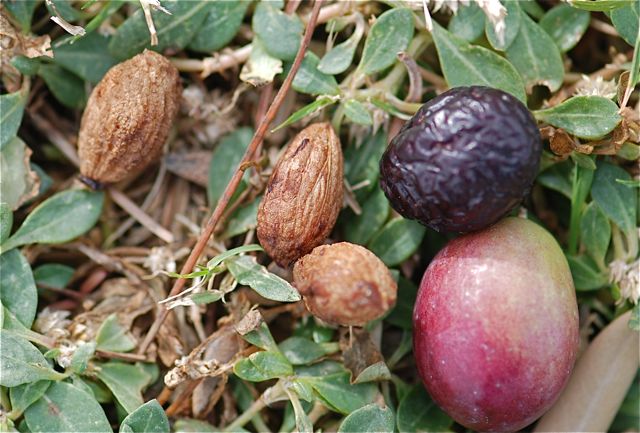
How to Grow an Olive Tree From a Seed


The olive tree is a member of the Oleaceae family and a plant that is native to coastal areas in the Mediterranean. Olive trees are beautiful additions to any yard or indoor environment and can be grown relatively easily from their seed state (the pit of an olive fruit). It is important to note, however, that most olive trees that are grown from a seed state will not work optimally as fruit-bearing trees, but only as ornamental trees.

How to Propagate Olive Trees by Sarah Morse

How to Grow an Olive Tree From a Seed By Geoffrey Weed

How to Grow Olive Seeds By Katelyn Lynn

How to Grow Olives From Seed By Eulalia Palomo

How to Plant an Olive Seed By Stan DeFreitas

How to Plant an Olive Tree From a Seed By Eleanor Jewell

Caltech will mass produce its own brand of olive oil

PASADENA, California (AP): Producing olive oil from the trees on campus could soon launch Caltech, a place best known for rocket science, into the rarified orbit of gourmet condiments.


Sixty of Caltech's 130 olive trees will be used this fall to harvest bottles of "Olive Walk,'' named after a campus walkway that is stained black by the number of olives that fall to the ground each year.

Students, faculty and grounds crews will do the work from ladders and cherry pickers. The idea came from two students who proposed an experiment to the new Caltech president, Jean-Lou Chameau, an engineer who loves cooking.

Students Ricky Jones and Dvin Adalian asked themselves: Could Caltech's trees produce enough olive oil to bottle the stuff?

Chameau challenged them to try it and, if it worked, he promised to cook them dinner at his residence.

The students, with help at times from as many as 15 friends, took up the dare.

Through trial and error, they were able to separate 30 pounds (13.6 kilograms) of black and green olives from water and solids.


They used window screens as part of their makeshift olive presses, then purified their final product by spinning it in biology lab centrifuges.

"They are different chemical structures, and because of that they don't bind to each other and don't have the same molecular weight. So you use a centrifuge to take advantage of that property and separate them by density. So oil will go to the top and water will go to the bottom, along with dirt and particulate matter,'' explained Jones.

The result: a half-liter of oil that Chameau's wife, technology researcher Carol Carmichael, said tasted "wonderful.''

Their success inspired Delmy Emerson, Caltech's buildings and grounds director, to send a batch of olives to a commercial presser. Out of that came 54 small bottles that are being given to university donors, guests and staff.


This fall the experiment expands in a big way when 60 trees are harvested as part of a campus festival.

Organizers hope to produce 3,000 bottles of oil and sell them on campus. They hope to raise as much as $30,000 (euro21,990), which will likely be used for scholarships or bonuses for campus gardeners.


Caltech, which operates the Jet Propulsion Laboratory where rocket engines are tested, is not the first university to enter the world of olive oil harvesting and processing. The University of California, Davis, and California State University, Fresno, also pick and sell their own brands.

But Craig Makela, president of the Santa Barbara Olive Co., joked that Caltech might become the first school to send a bottle of its olive oil to the moon.

[Source: The Star]

Wednesday, 2 January 2013

Extra Virgin Olive Oil is 75% Monounsaturated Fat and Has Many Other Health Benefits

“The Truth About Olive Oil” is an ebook about the benefits of using extra virgin olive oil (both internally and externally). The author of this book, Joyce Zborower, received her Master’s Degree from Bradley University in clinical psychology in 1969. She began studying about food in an effort to learn how to better care for her family. The more she learned about food, the more she wanted to learn and eventually attended other college level classes in biology and nutrition. Because of her extensive knowledge about food and nutrition and their impact of our daily lives, Joyce decided to share her knowledge in a book – “The Truth About Olive Oil.”


Jim Henry, who is President of Texas Olive Ranch and Executive Director of Texas Olive Oil Council, wrote the Forward for this book. He has been in the olive business for twenty (20) years and considers Joyce’s book to be a “must read” for anyone interested in learning about olive oil. His feeling is that most people think of olive oil as a mysterious and exotic Italian gourmet item mainly promoted by various nutritionists and medical programs. His feeling is that currently people in the U.S. aren’t using olive oil as extensively as they should because they simply don’t know enough about its many benefits.

However, when people learn of the extensive benefits of olive oil, it will become much more a staple of their nutrition. For example, cooking in extra virgin olive oil is much better for you than regular cooking oils because heating extra virgin olive oil produces far fewer trans fats than regular oil. Also, eating extra virgin olive oil helps reduce LDL cholesterol and increase HDL. Joyce’s book, “The Truth About Olive Oil”, will help them learn. For more details about the health benefits of olive oil, you can visit the Amazon page for the book here:

http://www.amazon.com/The-Truth-About-Olive-ebook/dp/B008Z7VJG4

Olive oil is composed of 75% monounsaturated fat which is considered the best kind of fat to eat. One of the reasons is that the body can burn it as energy which can help you lose weight. This isn’t true of other kinds of fats. It also contains antioxidants, called polyphenols, believed to help lower blood pressure. Some people eat one or two tablespoons of olive oil directly out of the bottle every morning. Be careful though. If your body isn’t used to this, it can act as a laxative.

“The Truth About Olive Oil” is available at Amazon.com as a downloadable Kindle ebook in English or Spanish and as a print-on-demand paperback book in English.

[Source: WebWire]