Showing posts with label Olive. Show all posts

Wednesday, 16 December 2015

Tunisian PM opens olive oil repacking plant

By Joey Aguilar

Food production in Qatar has crossed another milestone with the opening of a plant last week to repack olive oil and distribute more than 28 Tunisian products in the local market.


Tunisian and Qatari dignitaries at the opening ceremony.

Tunisian Prime Minister Al Habib Essid officially inaugurated the new facility at the New Industrial Area in the presence of guests and officials from Qatar and Tunisia.

The Qatar Tunisian Food Company, owned 51% by Mahaseel (a subsidiary of Hassad Food) and 49% by a number of Tunisian companies, has a production capacity of 1,000 tonnes of olive oil annually.

Prime Minister Essid, who was joined by Hassad Food Board of Director and CEO Khalid Mubarak al-Delaimi at the opening, cited the close ties and co-operation between Qatar and Tunisia in all fields.

Speaking on the sidelines of the event, he thanked Qatar for funding a special project in his country which started two years ago and now has been benefiting many Tunisians, especially the youth.

The visiting Prime Minister, as well as guests, were taken on a tour of the facility to see how olive oil is processed and how it undergoes different stages of production: from receiving olive oil, storing it in controlled temperature, and then passing through the filtration process. Finally, the product will be packed in special glass bottles that come in different sizes.

The product is tested several times at different stages in the laboratory to ensure the consumer gets the highest quality.

“This expansion will help us to export products to various GCC countries such as Saudi Arabia and the UAE and we hope to cover others such as Kuwait, Bahrain and Oman,” al-Delaimi noted.

He added that the facility would also help them in bringing better materials and products from Tunisia such as tuna which is already in the Qatar market.

In a press statement, Hassad Food chairman and managing director Nasser Mohamed al-Hajri expressed confidence that QT’s new plant will help supply more olive oil to the market. "The opening of QT’s new plant is a step forward in the field of food packing in Qatar, as it will surely contribute to meeting the need of from olive oil in the market."

He also echoed the statement of the Tunisian Prime Minister saying that his presence at the opening ceremony demonstrated the strong relationship between the two countries.

Hassad Food noted that QT’s operations has expanded and it has started exporting its products to other GCC countries. The company is planning to take its products to European and Asian markets by 2017.

Founded in 2000, QT is one of the leading companies in packing and exporting olive oil in the GCC.

[Source: Gulf Times]

Tuesday, 15 December 2015

Disney star travels with olive oil & chocolate?

By Jennifer Grubb


2013 is starting with a bang for Disney star Bridgit Mendler. The fourth season of her Disney Channel show “Good Luck Charlie” is in production and her song “Ready or Not” from her debut album “Hello My Name Is…” just broke through the top 50 of Billboard’s all-genre Hot 100 singles list. As if that wasn’t enough, the 20 year-old is also a new student at the University of Southern California.


Her demanding schedule requires frequent travel, so the Los Angeles resident does her best to stay healthy by getting seven hours of sleep, eating well, and stocking up on tea. “Whenever my voice is feeling hoarse, I just guzzle down some tea,” Bridgit says. “That usually helps a bit and if not that, believe it or not, I have a little spoonful of olive oil.” She confesses she’s a bit of a procrastinator when it comes to packing and never leaves home without dark chocolate.


Despite her hectic schedule, Bridgit likes being on the road. “I really enjoy the new experiences and meeting new people, but I have to say I'm a homebody so I’m always excited to be back home,” she admits.

But alas, the road is calling again. Bridgit will soon be heading to New York City, where she’ll perform at a charity concert for UNICEF hosted by fellow Disney star Selena Gomez on Saturday January 19th.

Visit her website: bridgitmendlermusic.com for more information.

[Source: HLNtv.com]

Saturday, 12 December 2015

Happy 3 Years Anniversary

December 12, 2012 - 2015.
Keep living, keep kicking, keep #gOlive.

Happy 3 Years Anniversary.

Friday, 4 December 2015

Soon to be born Himalayan olive oil

Two projects, both with Italian contributions, in Nepal and Pakistan. In the District of Bajura hundreds of olive trees have been planted. In the province of Khyber Pakhtunkhwa is pointing to put 4 million trees


by S. C.

Two different projects will have a starring role of Italy in an attempt to catch the olive in the Himalayas.


In the first case, in Nepal, the agronomic challenge was launched a few years ago by the University of Tuscia. The project, presented by the Department for Innovation in Biological Systems, Agri and Forestry (Dibaf) has its origin between 1994 and 1999 when the Tuscia organized two scientific expeditions aimed to the study of high altitude vegetation in the north-western Nepal.


With the last expedition (1999) is found in the widespread presence of olive trees (Olea genus): native species Olea cuspidata and Olea glandulifera. Subsequently, through other missions, you find in Bajura District, village of Kolti, an appropriate site to experiment and bring you home to hundreds of olive trees from the collection of the University, become grafts Italian varieties (Olea europea) on local species Olea cuspidata widely spread on the territory of this region of the Himalayas. At the same time the local workers were trained to farming practice to kick off the project by planting plants in Nepal.


In the second case in Pakistan, the local Ministry of Agriculture, Arbab Ayub Jan has officially announced a project, funded by Italy with 360 million Pakistani rupees (approximately € 3 million) for the planting 4 million trees olive tree. Even in this case has already been found the most suitable, or the north-western province of Khyber Pakhtunkhwa. The objective is to achieve self-sufficiency olive oil for the country.

[Source: Teatro Naturale International]

Thursday, 3 December 2015

U.S. International Trade Commission investigates the olive oil industry

After a December public hearing, it's harder to understand the future of the US extra virgin olive oil market and the olive oil marketing order. Testimony of some key witnesses will provides a clearer idea

by Alberto Grimelli

Some months ago the U.S. International Trade Commission (USITC) has launched an investigation into the global competitiveness of the U.S. commercial olive oil industry.


The investigation, called “Olive Oil: Conditions of Competition between U.S. and Major Foreign Supplier Industries”, was requested by the U.S. House of Representatives Committee on Ways and Means in a letter of September 12, 2012.

In its letter, the Committee stated: "The U.S. commercial olive oil industry has grown rapidly over the last decade, employing modern agriculture technologies and research to capture the growing domestic demand for olive oil.... U.S. consumption of olive oil has increased approximately 40 percent in the past ten years. Although domestic production has increased, the vast majority of U.S. consumption is satisfied by imports."

As requested, the USITC, an independent, nonpartisan, factfinding federal agency, will provide, to the extent possible, information and analysis on the major suppliers of olive oil, particularly Spain, Italy, and North African countries, as well as the United States. The report will cover the period 2008-2012 and to the extent possible will provide:


- an overview of the commercial olive oil industry in the United States and major supplier countries, including production of olives for olive oil processing, planted acreage and new plantings, processing volumes, processing capacity, carry-over inventory, and consumption;

- information on the international market for olive oil, including U.S. and foreign supplier imports and exports of olive oil in its various forms, olive oil trade between the European Union and North African countries, and a history of the tariff treatment and classification of olive oil;

- a qualitative and, to the extent possible, quantitative assessment of the role of imports, standards and grading, prices, and other factors on olive oil consumption in the U.S. market; and

- a comparison of the competitive strengths and weaknesses of the commercial olive production and olive oil processing industries in the major producing countries and the United States, including factors such as industry structure, input production costs and availability, processing technology, product innovation, government support and other government intervention, exchange rates, and marketing regimes, plus steps each respective industry is taking to increase its competitiveness.

The USITC will submit its report to the Committee by August 12, 2013.

On December 5, 2012, the USITC held a public hearing in connection with this investigation on December 5, 2012. What happened during this public hearing? The testimony of the witness will help us to understand.

“Fraud has plagued the olive oil business for thousands of years and continues to this day – said Tom Mueller, journalist and author of the book “extra Virginity” - olive oil quality, good and bad, is not matter of nationalism. Some extremely bad oil is made right here in the USA: my book describes several high profile American fraudsters. And much of world's finest olive oil is made by the Mediterranean, especialli in Spain, Italy and Greece. Americans consumers who buy these false extra virgins are being duped.”


“The Olive Center's three reports on olive oil quality – said Selina Wang, Research Director of the UC Davis Olive Center – have analyzed a total of 207 samples purchased from supermarkets and food service distributors. These studies found that 65% of the Mediterranean olive oil samples did not meet the IOC's minimal extra virgin standards, and that two of the samples were adulterated with canola oil. UC Davis conducted both IOC chemical and sensory analysis. The NAOOA's quality monitoring program does not include the IOC sensory standard.”

“Imports of olive oil account of the overwhelming majority – or about 98% - of growing US consumption - said Eryn Balch, Executive Vice President of NAOOA (North American Olive Oil Association) – NAOOA's ongoing mission is to ensure that imported olive oil is authentic and properly labeled. The common denominator in all of the NAOOA's efforts in this respect in the international standards overseen by the IOC. The problem is that conclusions of the UC Davis studies rely primarily on sensory testing, which of all the test methods is the one that is subjective and can produce variable results.”

“The process of adopting a federal marketing order is beneficial for both domestic producers and importers – said Alexander Ott, Executive Director of AOOPA (American Olive Oil Production Association) – If Europe's olive oil industry has benefited from an import quality regulation why shouldn't the US go ahead and protect the US consumer from both fraud and poor quality olive oil. To date there has not been a marketing order submitted or has one been drafted for submission so there is no marketing order entity that would have an interest in the farm bill. Yes, we are discussing a potential order with growers but the hysteria over potential federal marketing oderde is somewhat humorous.”


“The combination of a Mediterranean climate, productyion expertise, and entrepreneurial spirit provide the foundation for California to capitalize on the growing opportunities the market has to offer – said Mechel S. Paggi, Director Center for Agricultural Business, Califonia State University - Unlike their foreign competitors, California producers receive little government support in their effort to grow the industry.”

Fraud, olive oil quality, competition with European producers – these are the key problems, that the public hearing addressed. Who will win? Which side will prevail? No one knows at this point, but at least we now understand better who the players are in the competition: the NAOOA, which represents importers and distributors, and the AOOPA, representing growers and processors.

This is nothing new for Europeans. In fact, we’ve seen this competition every day, for decades. Good luck, USA, and welcome to the real world of the olive oil business!

[Source: Teatro Naturale International]

Wednesday, 2 December 2015

Amazing Landscapes: Tuscan-Inspired Yard


This beautiful Italian-inspired landscape mirrors the distinct Tuscan style of the home. Olive trees, lavender and a variety of grasses add Italian flair to this landscape design. Design by Jeff Allen.

[Photo: HGTV Remodels]

Tuesday, 1 December 2015

California olive oil industry ripe for expansion

By Robert Rodriguez

California’s burgeoning olive oil industry is expected to have a record-breaking year in 2015 as demand and acreage continue to grow.


This year, the state’s olive growers are estimated to churn out 4 million gallons of California extra virgin olive oil, nearly double the amount milled in 2014.

Much of the growth is coming from new, higher-yielding orchards that have been planted statewide, including in the central San Joaquin Valley. The region is now home to nearly a dozen companies crafting high-quality oils.

Even foreign growers have recognized California’s potential. Australia’s largest olive oil company, Boundary Bend, opened its first U.S. facility earlier this year in Woodland and has plans to expand over the next several years.

California’s olive industry leaders say that much of what sets the state’s 400 olive oil producers apart from their larger foreign competitors is quality.

While California has grown olives for decades, the trend now is to plant olive varieties specifically for their smooth and rich tasting oil. These days, the number of olive acres harvested for the cannery has dropped from a peak of 38,000 in the late 1970s to just 18,000 acres currently.

“Table olives are going the other direction,” said Adin Hester, president of the Oliver Growers Council in Visalia. “The numbers are up for olive oil production and it makes sense.”

The state’s olive oil estimate may not seem huge, compared to mega-crops like almonds and milk that produce in the billions of pounds or gallons, but it’s a big deal for the industry.

“We are growing by a percentage point a year and that is incredible considering we were just 1 percent of the total market in 2011 and now we are 4 percent,” said Patricia Darragh, executive director of the California Olive Oil Council in Berkeley. “The demand is growing.”

The olive oil council estimates the size of the state’s olive acreage at 35,000 with an additional 3,500 acres expected to be planted each year through 2020. California’s fourth year of drought also has made the drought-tolerant olive tree more attractive to some growers.

“Farmers are looking at their portfolios and trying to manage their water availability,” said Kimberly Houlding, executive director of the American Olive Oil Producers Association in Clovis. “So when you have a tree that takes half to one-third of the water of other tree crops, then olives begin to make sense.”

Although California represents just 4 percent of the market, with major imports coming from Italy, Spain and Tunisia, it has been quietly nibbling away at the importers’ dominance.

Helping to turn the tide was a landmark 2011 study done by the University of California that found the quality of some of the largest imported brands was inconsistent at best. It also found that most of the top-selling olive oils failed to meet international standards for extra virgin olive oil.

True extra virgin olive oil has to meet international standards for how it is stored and processed, meaning no chemicals or extreme heat is used during the extraction process and the oil is free of defects of flavor or odor, according to the California Olive Oil Council.

Among the Valley olive oil makers having success is Vincent Ricchiuti, whose family operates the award-winning Enzo Olive Oil. The family farms 400 acres of olives in Madera and may be planting more.

Working in California’s favor, Ricchiuti said, is its quality and strong consumer interest in local and U.S.-made products.

Enzo recently signed a deal to sell its organic extra virgin olive oil at more than 1,000 Publix grocery store chains. The Florida-based chain operates primarily in the southeast.


“When Publix brought us on we began to see new possibilities,” Ricchiuti said. “If we want to continue to grow our client list, we are going to have to plant some more acres. There is no question that people are becoming more aware of California extra virgin olive oil.”

To help remind consumers that there is a difference between California and imported oil, the California Olive Oil Council also certifies that its members’ oils are 100 percent extra virgin olive oil. The organization represents about 90 percent of the state’s 400 olive oil producers. The council’s certification process involves meeting or exceeding specific standards for acidity level and ultraviolet light absorbency. A blind panel taste test also looks for taste and odor defects.

“People are starting to see the quality of what we produce and it is only inevitable that there will be more growers and oil being produced, ” said Katrina Van Conant, co-founder of Scout Olive Oil in Clovis, one of the Valley’s newer oil makers.

As Australia’s largest olive oil producer, Boundary Bend wants to tap the U.S. demand for premium olive oil, especially oil from California. The U.S. is the world’s fourth-largest market for olive oil.

The company, whose flagship brand is the award-winning Cobram Estate, is spending more than $20 million on a mill, storage facility, laboratory and office in Woodland, just north of Sacramento. The company will be milling oil from California growers as it prepares to plant its own trees next spring.

Adam Englehardt, chief executive officer of Boundary Bend’s U.S. operation, said the plan is to plant 300 acres of olives a year over the next seven years.


“Consumers are wanting a higher quality, domestically produced oil, and we can provide that,” Englehardt said.

As part of the company’s growth plan, Boundary Bend is looking at building additional processing plants in other olive producing regions of the state, including the Valley. Englehardt said Boundary Bend has identified the Valley’s westside as an area of interest for new olive trees. The challenges are high land prices and the presence of a fungus known as verticillium.

“We have to be able to find land at a price point that is sustainable for this company,” Englehardt said. “But we are looking.”

[Source: The Fresno Bee]

Thursday, 26 November 2015

Feral olive trees removed

Efforts are continuing to clear feral olive trees which have infested many parts of the Indigo Shire.

Almost all of the tress have been removed along roads in the Rutherglen and Chiltern areas as part of a three-year program to re-establish native plants in the region.

Feral olive trees often carry diseases and pests such as the olive fly.

Arborist Andrew Ollington says the young olive trees were the most difficult to detect.

"The little ones, we've just got to pretty much get down on our hand and knees and crawl through under all the other trees and cut them out and poison them," he said.

"We had to get them done before the fruit came on them - that's when they get spread."


[Source: ABC News]

Wednesday, 25 November 2015

Once in Time when Palestinian Farmers Harvesting Olive This Year

By Diana Qatamesh, the West Bank Programme Policy Officer.

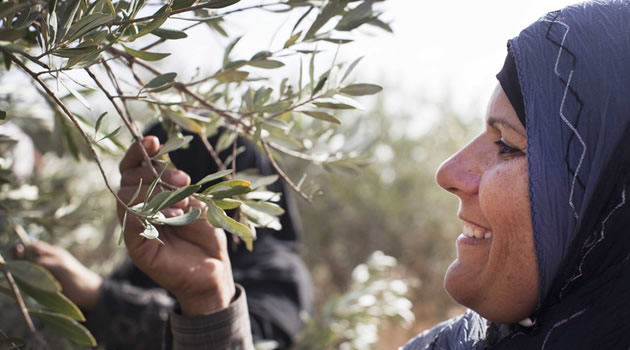
TEMPO.CO, Jakarta - The annual olive harvest, which finishes this week, is one of the most important events of the year for Palestinian farmers. It brings communities together and provides an income for around 80,000 families.


Yet olive farmers in the West Bank face enormous challenges. Their access to land, water and markets is often limited by Israeli settlements, checkpoints and access restrictions, all aspects of the Israeli occupation. But despite these challenges, olive farming has huge economic potential. The olive oil industry provides up to 14 percent of Palestinian agricultural income, and agriculture accounts for nearly 25 percent of GDP.


I went to Deir Istiya to meet some of the olive farmers there. Deir Istiya is a small village in the hills surrounding Salift in the central West Bank. It is famous for its olive groves.

Deir Istiya has a total area of 34,000 dunums. Approximately 6,000 dunums were designated as Area ‘B’ under the Oslo agreement in 1993. This means they are under Palestinian civil control, but the Israeli military controls security. The rest of the land, constituting 28,000 dunums, has been designated as Area C. This means that although it is in the West Bank, the government of Israel retains control of all aspects, including planning and security. In Deir Istiya, 83 percent of the total area is under Israeli government control, and the village is surrounded by seven Israeli settlements.


When we first reach the area we meet with Yaseen Abu Hijleh. He is 88 years old and one of the founders of the olive oil cooperative in Deir Istiya, started in 1976. Abu Hijleh told me about the olive press that the cooperative first bought. “Due to a lack of water we were only able to buy a half automatic press, which uses a lot less water than a fully automatic one. At the time it sounded amazing. We were the first village in Salfit area to possess an olive press.”


The cooperative has 150 members now and it has transformed the half automatic press to a fully automatic one.Mustafa Kokash, an olive farmer from Deir Istyia, shows me around the press. “For the fully automated press we have to buy water from Israel – each harvest it costs us about NIS6000,” he tells me. Shortage of water is a huge problem for Palestinian farmers, particularly in Israeli-controlled Area C, where Palestinians are rarely allowed to build new wells, pipes or cisterns. Between 1988 and 2013, Oxfam’s partner, Bimkom, reported that 94 percent of all Palestinian applications for construction in Area C of the West Bank were rejected.


Most of the farmers here have lost trees due to Israeli settlers. They have been burnt, uprooted or cut down – actions for which there is rarely accountability in Israeli courts. Since 2010 more than 60,000 olive trees have been lost in the West Bank. Farmers also face restrictions on their movements, especially in land near the settlements. To do anything to their trees they have to get a permit from the Israeli authorities.

Oxfam partner Yesh Din reports that 95 percent of crimes reported by Palestinians to Israeli police are closed, unresolved.

Mustafa told me: “Five months ago Israeli settlers cut down and burned 350 olive trees from my land near one of the settlements. These olive trees were three years old and were supposed to start producing olives next year. Buying them cost me NIS4500. If settlers did not uproot them and they reached their producing age they would have produced 150 kg of olive oil a year.”


In 2007 Oxfam started working with the Deir Istiya farmers’ cooperative. Ayoub Abu Hijleh, one of the programme officers for Oxfam, said: “we at Oxfam wanted to make the situation for olive farmers much better than it was at that time. Farmers here face their trees being uprooted and huge restrictions on when they could care for their trees.”

Oxfam and local partners run the ‘From Grove to Market’ programme, funded by the Swiss Government, which helps Palestinian farmers improve the quality and quantity of their oil and reach local and international markets. Oxfam gave the farmers training on how to take care of the olive trees, and introduced them to the best techniques in order to produce high quality olive oil and to increase the amount produced.

Oxfam also made it possible for Palestinian farmers to obtain internationally recognised organic olive oil certification. This opened up new markets in countries like the UK and France, helped them compete globally, and it increased their profits. At the moment there are 17 farmers in Deir Istiya in the process of getting their organic certification.


I met another farmer in Deir Istaya, Azzam Salman. Azzam, who is 41 years old, owns land near one of the settlements. He was given four days by the Israeli authorities to harvest it. “It is 20 dunums of land, and has almost 100 olive trees. It would need 15 days or more to harvest,” said Azzam. “In the early 1990’s, when these olive trees were cared for, they would produce 500kg of olive oil a year. Now the same trees produce only 40kg of olive oil. I can’t get to them to plough them or prune them.”

Azzam knows that the money he gets from the 40kg of olive oil is not much, but he still goes to harvest the trees to make sure he retains ownership of the land.


As I was leaving the village I couldn’t help but reflect on the immense changes these farmers have witnessed in their village. In one lifetime Deir Istiya has been surrounded by settlements, land has been confiscated and countless olive trees have been uprooted. I hope that the farmers here can one day harvest, prune and plough their trees without waiting for Israeli permits.

[Source: TEMPO.CO]

Tuesday, 24 November 2015

Millenarian olives in Malta

By Paul Portelli

The olive tree is a small evergreen tree that grows throughout the Mediterranean area and in parts of the world with a Mediterranean climate, including California, parts of South Africa and parts of Western and South Australia.


Olive trees are nowadays used to define the extent of the Mediterranean climate, which is characterised by relatively-hot dry summers and mild wet winters. Olive trees require 30 to 100 centimetres of rain falling mostly in autumn and winter. They do not survive if the ground freezes for more than a few days.

The wild olive tree is found in many parts of Africa and Asia, but its cultivation probably started thousands of years ago in the Eastern Mediterranean by the early Phoenicians.

Its cultivation was later introduced in other parts of the Mediterranean by the Phoenicians themselves, and eventually by the Greeks.


There is no record of when olive trees were first introduced in the Maltese islands. They were present during the Roman period when olive estates existed such as the one at San Pawl Milqi in Burmarrad.

They were here also during the Arab period, as can be confirmed by a number of Semitic place names such as Żebbuġ in both Malta and Gozo, Żejtun and Birżebuġa.

An olive tree takes 25 years to reach its full production, but after that it can continue producing olives for hundreds of years.

Trees over 1,000 years old are not uncommon. A number of olive trees in Malta are estimated to be between 600 and 1,000 years old.


Most of the trees that grew in the Maltese islands were cut down, either for firewood or more likely to make way for new crops such as wheat and cotton.

It is only recently that olive trees started to be planted again in the Maltese islands, and as many of them are still young it will be several years before they will reach full production.

Olives play an important role in both the landscape and diet of Mediterranean culture. The tree and its fruit and products feature in myths and legends of many Mediterranean cultures, but if such stories ever existed in Maltese culture they disappeared when the trees were cut down.

[Source: Times of Malta]

Monday, 23 November 2015

Of olives and oils

By Tee Shiao Eek

FROM the proverbial olive branch grows a small green (sometimes black) fruit. The essence of this fruit is in the oil, a pungent liquid of light green-golden colour, with a reputation that spans generations and cultures.


In ancient times, olive oil was revered as a gift of the gods, for people to use as food, lamp fuel, medicine, aphrodisiac and cosmetic. Today, olive oil has shed its mythical status, but it is no less important in the modern diet.

“Olive oil is the only vegetable oil that can be consumed as it is” without further processing or refining, says Dr Yahya R. Laleli, founder of Laleli Olive Oil, who hails from Turkey, where olive groves dotting the landscape are a common sight.

The olive tree is native to countries that lie along the coast of the Mediterranean Sea, including France, Italy, Spain, Morocco, Greece and Egypt.

“Olive oil is rich in monounsaturated fatty acids,” explains Dr Yahya, as well as contains omega-6 and omega-3, essential polyunsaturated fatty acids that can only be obtained from the diet.

While the monounsaturated and polyunsaturated fats play the lead roles in olive oil’s success story, there are also other beneficial compounds like beta-carotene, vitamin E, sterols and polyphenols, which contribute to the other effects of olive oil.

Health benefits

When it comes to the health benefits of olive oil, Dr Yahya, a solemn man who chooses his words carefully, comes as close as he ever will to gushing, during a recent talk organised by the National Heart Institute.

The most well known effect of olive oil is on heart health. Dr Yahya attributes it to the high oleic acid (a type of monounsaturated fat) content, which lowers “bad” LDL cholesterol while maintaining “good” HDL cholesterol.

He also quotes a study carried out by researchers from the Faculty of Medicine Timone in Marseille, France. The study, which was published in the American Journal of Clinical Nutrition, examined the diets of 212 volunteer subjects, all of whom had a moderate risk for heart disease.


“To investigate the value of a Mediterranean diet, subjects were split into two groups, one to consume a low-fat diet and the other to take a Mediterranean diet (rich in whole grains, fruit, olive oil, vegetables and red wine),” says Dr Yahya.

“Results found that those who had taken the low-fat diet reported a drop in cholesterol of 4.5%. The group who had consumed the Mediterranean diet had a cholesterol reduction of 7.5%,” which he explains is translated into a 15% reduction of heart disease risk.

Olive oil is also believed to protect against cancer, including breast, colon and prostate cancer, although there are no definitive studies that prove this, or demonstrate the mechanism of action.

Dr Yahya suggests that olive oil has a protective effect on age-related cognitive decline, and may even play a role in increasing longevity.

“A calorically-restricted diet – that includes all nutrients but has 30% fewer calories – has been found to extend the lifespan of rodents by 30 to 50%. Scientists hope, but do not yet know, whether the same will be true in people.

“One class of chemicals found to mimic calorie restriction is flavones, found abundantly in olive oil,” he explains.

Compared to other vegetable oils, olive oil ranks among the highest in terms of monounsaturated fatty acids, but loses out in the polyunsaturated fatty acids category.

However, Dr Yahya maintains that olive oil has the advantage, as it can be consumed as it is without refinery. Other oils have to undergo refinery, where the other benefits from the seed or plant, including plant sterols and phenolic compounds, are lost in the process.

Prized virginity

The quality of olive oil is measured by its “virginity” – in other words, whether the oil was extracted from the fruit without any chemical treatment or refining, which may lead to alterations in the oil.


As a result, you have extra virgin, virgin and pure (a blend of refined and virgin) olive oil. Interestingly, the level of virginity does not only refer to the oil’s physical characteristics, but also affects its beneficial properties.

For example, extra virgin olive oil is now known to have similar anti-inflammatory activity to the painkiller ibuprofen. The anti-inflammatory properties are due to a compound called oleocanthal, which is what produces the stinging sensation at the back of the throat when you consume extra virgin olive oil.

The discovery is said to be significant because scientists believe that inflammation plays an important part in a variety of chronic diseases like stroke, heart disease, and breast and lung cancer.

Even our senses can give us a clue to which olive oils are more beneficial. The organoleptic characteristics of olive oil, as perceived by our sense of smell and taste, are used to grade the quality of the oil.

“Mild bitter, pungent, fresh, aromatic and fruity tastes are some of the desirable traits associated with good organoleptic qualities. On the other hand, tastes of strong bitter, earthy, rancid or flat are undesired and are signs of inferior quality oil,” explains Dr Yahya.

Virgin and extra virgin olive oil have more organoleptic benefits, which translates into more health benefits.

In the end, the best olive oil is one that suits your taste and cooking style. If you are a “virgin” to cooking with olive oil, start with a mid-range “multi-purpose” oil and let the flavour transport you to the Mediterranean coast!

[Source: The Star]

Thursday, 19 November 2015

Has the Italian Mafia Sold You Fake Extra Virgin Olive Oil?

By Barbie Latza Nadeau

Seven of Italy’s top olive oil companies have been accused of selling some sullied extra-virgin olive oil, and it may be the result of the far-reaching agro-mafia.


ROME — Think about the last time you had really, really good extra-virgin olive oil. The kind of pungent oil that tickles the back of the throat and drips like green liquid gold from your crusty bread or lettuce leaves. You probably paid a small fortune for it. Sadly, if it was from Italy, it might not have been as virgin as you think.


This week, Italian prosecutors in Turin opened a criminal investigation into seven of the country’s top olive oil export companies: Carapelli, Bertolli, Santa Sabina, Coricelli, Sasso, Primadonna, and Antica Badia for allegedly cutting the good stuff with less precious oil.

After an Italian food blog broke the news that expensive oil being passed off as extra-virgin might be stained last May, Italian agriculture and customs started doing their own tests and found that in nine out of every 20 bottles these producers sold in country or exported out were tainted. Italy is the second largest olive oil producer in the world after Spain. But Italy is also the world’s largest importer of olive oils from Tunisia, Morocco, Greece, and Spain. They also import canola and soybean oil from abroad. Many producers happily admit to using the imported oil as a base for their lesser-quality and industrial oils, stating exactly where the oil originated in often miniscule print on the labels. And there is nothing illegal at all about it.


The problem—read fraud—comes from the fact that the companies under investigation are accused of importing canola and even soybean oil to mix into their expensive oil sold as extra-virgin. By law, extra-virgin has an acidity of no more than 0.8 grams per 100 grams of oil, and it must be made from the first press of the olives, which, if up to standards, commands a price tag that is often up to 35 percent more than other oil. If not, it should sell for much less—and say so on the label.


All of the Italian olive companies under criminal investigation deny any wrong-doing, citing faulty testing. Many have launched counterattacks, accusing authorities of fraud, which, in Italy, is not always a long shot. What’s troubling is that farmers and olive oil producers at the center of the investigation are being accused of cooperating with the so-called agro-mafia which is a catchall label often used in Italy for fraudulent behavior and corruption in the agriculture sector, which may or may not have anything to do with the country’s established organized crime syndicates. But it often does, and many organized crime syndicates’ tentacles reach into every facet of Italian life and livelihood.


“It is often difficult to understand the economic impact of agro-mafia but those who produce olive oil are increasingly in the crosshairs of professional counterfeiters,” says Domenico Pautasso, director of Italy’s national agriculture association Coldiretti. “The turnover of the agro-mafia exceeds €15.5 billion, and the entire system of false ‘made in Italy’ products exceeds €60 billion a year.”


In fact, the Italian Confederation of Agriculture estimates that there are 240 agro-mafia offenses every single day in the agriculture sector. That breaks down to eight crimes every hour, according to a report called “Agromafia” published last year. The report states that more than 350,000 farmers and producers are involved in the widespread fraud, that runs the gamut from faulty pasta to counterfeit cheeses and hams. Some of the farmers and producers are victims who sell their authentic products to producers who compromise their integrity for higher profits; others are knee-deep in the quagmire of corruption.


The Confederation of Agriculture estimates that of the illicit industry’s profits, some €4.5 billion is generated from blatant theft and robbery of authentic products from fields and warehouses. An estimated €3.5 billion of the dirty revenue comes from racketeering, and around €3 billion is generated from counterfeiting of the “made in Italy” brands.

Italian anti-mafia and anti-corruption authorities work tirelessly to try to stop the widespread practice that has been identified in every single province in Italy in one sector or another. In 2014, they confiscated more than 12,000 properties, including farmland and production facilities. “The presence of organized crime affects the entire system, from production to distribution,” says Pino Cornacchia, Head of the Confederation of Agriculture’s Campania Economic Development Department. “It is also a massive deterrent to all young people otherwise keen to invest in the primary sector.”


It is not the first time Italian olive oil has been tainted by scandal. In 2011, New York Times contributor Tom Mueller laid out the scandal in his book, Extra Virginity: The Sublime and Scandalous World of Olive Oil in which he reported that more than 50 percent of all olive oil imported into the United States is adulterated with lesser oils. “In the past, the technology that had been used had been used really by the Romans,” Mueller writes. “You grounded the olives with stone mills and you crushed them with presses.”

Everything has apparently been downhill since then.

So what is a lover of olive oil to do? “For those who buy it is important to pay attention to the label,” Alberto Martorelli of Coldiretti told The Daily Beast. “Make sure you only buy oil made with 100 percent olive oil produced and bottled in Italy if you want authenticity. And make sure it passes the smell test. It should smell and taste like raw olives.”

Related:
Italian olive oil scandal: seven top brands 'sold fake extra-virgin'

Extra virgin on the ridiculous: Italian olive oil producers accused of fraud

Italy's slippery 'extra virgin' olive oil scandal

[Source: The Daily Beast]

Wednesday, 18 November 2015

Taste of Tuscany: Under the Olive Tree in Virginia offers gourmet oils and vinegars

By Martha M. Boltz

Tysons Corner Mall, just outside of Washington, DC in Virginia, is an over-crowded mecca of cookie-cutter stores, all looking alike, until you come upon this little bit of Italian culinary heaven.

On the lower level, basically between L.L. Bean and Nordstrom, stands the quaint little store, Under the Olive Tree, a gourmet cook’s delight with enough variety to suit the rest of us cooks as well.


Photo: An olive orchard in Umbria, Italy


Technically the shop bills itself as “a purveyor of Ultra Premium Extra Virgin Olive Oils and Balsamic Vinegars from around the world,” and a listing of them would exceed our word limit. Each oil is ready for tasting by turning the spigot of one of the large urns and letting a small sample to flow into a little paper cup.

Presided over by Marcel Beraud, his wife Fabiana and their lovely daughter, Marie Claire, the shop exudes a wonderful scent, a treat in itself as you wander around.

The oils come from various parts of the world such as Tunisia, Italy, Spain, Argentina, and more. On site at each plantation is a mill that starts the oil-making process from freshly picked green olives.

It’s a special process rapid enough to capture the freshest flavor as well as the highest quantity of health benefits. All olive oils are pressed cold and come from either natural or certified organic trees, producing the finest flavors.

Balsamic vinegars are also featured, with every flavor and concoction of tastes imaginable. My first selection was a dark chocolate flavored balsamic, which added a warm flavor to a salad caprese that is quite rewarding.

I also picked up a Chipotle EVOO, since spicy oil sounded delicious, and it was added to fresh pasta. The next visit I opted for a Basil EVOO, again a pleasing greenish taste.

In addition to the variety of oils and vinegars, a number of excellent pastas are available, all made in Virginia. I have a Red Pepper Fettuccine awaiting its taste test. For those who favor Mexican food and love chimichurri, small packets of a great chimichurri mix are available, which is spicy but very good.

There are other special spices presented with my personal favorite being a bottle of Black Truffle Sea Salt. While the tiny black flakes are easily seen, you have only to remove the top to catch the easily defined truffle flavor. A pinch of it in béchamel adds a definite spark!

Special tastings are frequent, usually on weekends. White Truffle Week started on January 11 will continue through Jan. 18 at 12:45 p.m.

Owner Beraud told me there are 24 flavors of balsamic vinegars, and 11 fused and infused EVOOs as well as four special oils, something for every palate.

When visiting Tysons Corner Mall, be sure to go down to the lower level and check out this relative newcomer inspired by the flavors of Tuscany. I guarantee you’ll be back for a return visit. The Berauds are friendly and helpful and the stock is outstanding. Their web site is found at www.undertheolivetree.net

Buono appetito!!

[Source: The Washington Times]

Tuesday, 17 November 2015

Olive farmers hoping for sunny days to harvest better yield

By Omar Obeidat

IRBID — Farmers in the Kingdom’s northern region are hoping for more sunny days so they can harvest their olives.

The farmers told The Jordan Times they have been unable to properly reap their olive fruits over the past three weeks, because of heavy rain, although the harvesting season started in mid-October.

Sami Obeidat, who was at an olive press in the village of Hibras in Irbid, said the later the harvest, the worse the quality of olive oil is.

According to Obeidat, November is the best period to harvest olives because they are riper and have higher oil concentrations.


But if harvesting lasts until the second half of December, the fruits are affected by rainwater, which ultimately affects the quality of oil, lowering its concentration, he explained.

The same concerns were echoed by Mohammad Bsharat, who owns an olive press, and Ahmad Malkwai, an olive farm owner in Irbid’s Kfarat area.

“We love rain and we always pray for rainfall,” Malkwai said, but farmers are racing against time to have their crops harvested before December as the weather is expected to become harsher.

Usually the harvest season runs from October 15 to January 20.

Bsharat noted that rainfall over the past three weeks disrupted the process, with only limited quantities of olives transferred to presses.

Farmers have only been able to harvest some olives because it has been dry for almost a week now, he added.

The price of a 16-kilogramme container of oil in Kfarat, home to hundreds of thousands of olive trees, ranges between JD80 and JD85.

Demand for oil is higher than last year and production is expected to be greater, Bsharat said.

Olive oil production this year is expected to be around 24,000 tonnes, while it was estimated at 22,835 tonnes last year, according to official figures.

With more than 20 million trees across the Kingdom, Jordan is listed among the top 10 olive producing countries in the world.

[Source: The Jordan Times]

Monday, 16 November 2015

Soldiers, Paramilitary Settlers, Attack Family Picking Olives In Their Own Orchard

On Sunday, Israeli soldiers and paramilitary guards of an illegal Israeli colony invaded a Palestinian olive orchard in Beit Ummar town, north of the southern West Bank city of Hebron, attacked the family and forcibly removed them from their own land.

Media spokesperson of the Popular Committee against the Wall and Settlements in Beit Ummar town, Mohammad Ayyad Awad, said paramilitary settlers of the Beit Ayin illegal colony, built on Palestinian lands, and Israeli soldiers, invaded an olive orchard before attacking and removing Hammad Abdul-Hamid Sleibi and his family from their land.


The orchard is located in Wad Abu ar-Reesh, north of Beit Ummar, close to the illegal colony that was built on privately-owned Palestinian lands.

The security guards attacked the Palestinians and chased them while threatening to shoot them with their automatic rifles, while the soldiers fired gas bombs and concussion grenades on the family, forcing them out of their own olive orchard.

On Sunday evening, eight Palestinians, including a cameraman working for France Press, have been injured, by Israeli army fire, after several military vehicles invaded the northern West Bank city of Qalqilia.

Also on Sunday, Palestinian medical sources reported Sunday that a 2-year-old toddler was injured after an Israeli military vehicle struck him in Bir Niabala town, in the Central West Bank district of Ramallah, and that a woman was injured in a similar incident in Ramallah.

In addition, six residents were injured by Israeli army fire after the soldiers invaded al-Baloa’ area in the al-Biereh city, leading to clashes with scores of local youths.

[Soource: IMEMC]

Jacqueline Fernandez's extreme olive obsession


We know actors like to snack on fruit but Jacqueline Fernandes' obsession with olives led her to do rather strange things.

During the shoot of her film with Ramesh Taurani in Turkey, the actress went gaga over munching on olives.

A source from the sets says, "Jackie loved olives so much that she would gorge on them every day. In fact even after she returned to India, her habit wouldn't go. She also demanded that her producers purchase the fruit for her on a daily basis."

Creative producer of the film Jay Shewakramani says, "It was around 8.30 in the morning when Jaggu (his nickname for the actress) called me and said she wants olives or she would not leave the room. We were supposed to shoot for a song in the studio and she was getting ready. We made a couple of calls and made sure the olives reached her on time." So much so that the actress even wanted the fruits to adorn the sets while she shot with co-star Saif Ali Khan.

[Source: NDTV Movies]

Friday, 13 November 2015

Destroying a symbol of life

By César Chelala


During the last few years, Palestinian olive trees, a universal symbol of life and peace, have been systematically destroyed by Israeli settlers. “It has reached a crescendo. What might look like ad hoc violence is actually a tool the settlers are using to push back Palestinian farmers from their own land,” a spokeswoman for Yesh Din, an Israeli human rights organisation monitoring incidents in the West Bank, previously stated.


The tree and its oil have a special significance throughout the Middle East. The olive tree is an essential aspect of Palestinian culture, heritage and identity, and has been mentioned in the Bible, the Qur’an, and the Torah. Many families depend on the olive trees for their livelihood.


Olive oil is a key product of the Palestinian national economy, and olive production is the main product in terms of total agricultural production, making up 25% of the total agricultural production in the West Bank. Palestinians plant around 10,000 new olive trees in the West Bank every year. Most of the new plants are from the oil-producing variety. Olive oil is the second major export item in Palestine.

For the last 40 years, over 1m olive trees and hundreds of thousands of fruit trees have been destroyed in Palestinian lands. The Israel Defence Forces have been accused of uprooting olive trees to facilitate the building of settlements, expand roads and build infrastructure. The uprooting of centuries-old olive trees has caused tremendous losses to farmers and their families. At the same time, restrictions to harvesting have come through curfews, security closures and attacks by settlers.


The uprooting of olive trees by the Israel Defence Forces and by settlers are done to protect the settlers, since they are supposedly used to protect gunmen or stone throwers. “The tree removals are for the safety of settlers… No one should tell me that an olive tree is more important than a human life,” declared an IDF army commander, Colonel Eitan Abrahams.

“As a result of the attacks on farmers by the IDF and by settlers, the farmers can’t get to their lands and work them. The settlers chase the farmers, shoot in the air, threaten their lives, confiscate their ID cards and damage the crops,” stated B’Tselem, an Israeli human rights organisation.

Practically not one of the complaints filed during the past several years on damage to Palestinians trees in the West Bank resulted in an indictment. The toll includes thousands of trees from several areas from Susya in the southern Hebron Hills to Salem in northern Samaria.


Last April, Israeli settlers from the Immanuel settlement uprooted some 450 olive trees and saplings from lands in Deir Istiya, northern Salfit. This followed the uprooting earlier of 120 olive trees in Wadi Qana. Since 1967 some 800,000 olive trees have been uprooted by Israeli forces and settlers in the occupied West Bank, according to research from the Palestinian Authority and the Applied Research Institute Jerusalem. This has threatened the livelihood of 80,000 families.

In a review he wrote on this issue, Atyaf Alwazir, a young Muslim American, stated that the uprooting of trees from Palestinian lands violates the Paris Protocols, The Hague and Geneva Conventions and the Covenant on Economics, Social and Cultural Rights.

According to Sonja Karkar, founder of Women for Palestine in Melbourne, Australia, uprooting olive trees is contrary to the Halakha (the collective body of Jewish religious law) principle whose origin is found in the Torah: “Even if you are at war with a city… you must not destroy its trees.”

To some Jewish activists’ credit, however, many of them are collaborating in the planting of new olive trees, to replace some of those uprooted by the Israeli settlers. On several occasions Rabbis for Human Rights donated saplings to Palestinian communities affected by the uprooting.


What do settlers actually want? To continue destroying Palestinians’ livelihood with impunity? To create a barren land, unfit for trees and people? To intimidate, terrorise and punish those who resist this tactic? Perhaps they should be reminded of A. E. Housman’s verses:

Give me a land of boughs in leaf,
A land of trees that stand;
Where trees are fallen there is grief;
I love no leafless land.

Dr. César Chelala is an award-winning writer on human rights and foreign policy issues.

[Source: Daily News Egypt]