Showing posts with label Article. Show all posts

Tuesday, 15 December 2015

Disney star travels with olive oil & chocolate?

By Jennifer Grubb


2013 is starting with a bang for Disney star Bridgit Mendler. The fourth season of her Disney Channel show “Good Luck Charlie” is in production and her song “Ready or Not” from her debut album “Hello My Name Is…” just broke through the top 50 of Billboard’s all-genre Hot 100 singles list. As if that wasn’t enough, the 20 year-old is also a new student at the University of Southern California.


Her demanding schedule requires frequent travel, so the Los Angeles resident does her best to stay healthy by getting seven hours of sleep, eating well, and stocking up on tea. “Whenever my voice is feeling hoarse, I just guzzle down some tea,” Bridgit says. “That usually helps a bit and if not that, believe it or not, I have a little spoonful of olive oil.” She confesses she’s a bit of a procrastinator when it comes to packing and never leaves home without dark chocolate.


Despite her hectic schedule, Bridgit likes being on the road. “I really enjoy the new experiences and meeting new people, but I have to say I'm a homebody so I’m always excited to be back home,” she admits.

But alas, the road is calling again. Bridgit will soon be heading to New York City, where she’ll perform at a charity concert for UNICEF hosted by fellow Disney star Selena Gomez on Saturday January 19th.

Visit her website: bridgitmendlermusic.com for more information.

[Source: HLNtv.com]

Friday, 4 December 2015

Soon to be born Himalayan olive oil

Two projects, both with Italian contributions, in Nepal and Pakistan. In the District of Bajura hundreds of olive trees have been planted. In the province of Khyber Pakhtunkhwa is pointing to put 4 million trees


by S. C.

Two different projects will have a starring role of Italy in an attempt to catch the olive in the Himalayas.


In the first case, in Nepal, the agronomic challenge was launched a few years ago by the University of Tuscia. The project, presented by the Department for Innovation in Biological Systems, Agri and Forestry (Dibaf) has its origin between 1994 and 1999 when the Tuscia organized two scientific expeditions aimed to the study of high altitude vegetation in the north-western Nepal.


With the last expedition (1999) is found in the widespread presence of olive trees (Olea genus): native species Olea cuspidata and Olea glandulifera. Subsequently, through other missions, you find in Bajura District, village of Kolti, an appropriate site to experiment and bring you home to hundreds of olive trees from the collection of the University, become grafts Italian varieties (Olea europea) on local species Olea cuspidata widely spread on the territory of this region of the Himalayas. At the same time the local workers were trained to farming practice to kick off the project by planting plants in Nepal.


In the second case in Pakistan, the local Ministry of Agriculture, Arbab Ayub Jan has officially announced a project, funded by Italy with 360 million Pakistani rupees (approximately € 3 million) for the planting 4 million trees olive tree. Even in this case has already been found the most suitable, or the north-western province of Khyber Pakhtunkhwa. The objective is to achieve self-sufficiency olive oil for the country.

[Source: Teatro Naturale International]

Thursday, 3 December 2015

U.S. International Trade Commission investigates the olive oil industry

After a December public hearing, it's harder to understand the future of the US extra virgin olive oil market and the olive oil marketing order. Testimony of some key witnesses will provides a clearer idea

by Alberto Grimelli

Some months ago the U.S. International Trade Commission (USITC) has launched an investigation into the global competitiveness of the U.S. commercial olive oil industry.


The investigation, called “Olive Oil: Conditions of Competition between U.S. and Major Foreign Supplier Industries”, was requested by the U.S. House of Representatives Committee on Ways and Means in a letter of September 12, 2012.

In its letter, the Committee stated: "The U.S. commercial olive oil industry has grown rapidly over the last decade, employing modern agriculture technologies and research to capture the growing domestic demand for olive oil.... U.S. consumption of olive oil has increased approximately 40 percent in the past ten years. Although domestic production has increased, the vast majority of U.S. consumption is satisfied by imports."

As requested, the USITC, an independent, nonpartisan, factfinding federal agency, will provide, to the extent possible, information and analysis on the major suppliers of olive oil, particularly Spain, Italy, and North African countries, as well as the United States. The report will cover the period 2008-2012 and to the extent possible will provide:


- an overview of the commercial olive oil industry in the United States and major supplier countries, including production of olives for olive oil processing, planted acreage and new plantings, processing volumes, processing capacity, carry-over inventory, and consumption;

- information on the international market for olive oil, including U.S. and foreign supplier imports and exports of olive oil in its various forms, olive oil trade between the European Union and North African countries, and a history of the tariff treatment and classification of olive oil;

- a qualitative and, to the extent possible, quantitative assessment of the role of imports, standards and grading, prices, and other factors on olive oil consumption in the U.S. market; and

- a comparison of the competitive strengths and weaknesses of the commercial olive production and olive oil processing industries in the major producing countries and the United States, including factors such as industry structure, input production costs and availability, processing technology, product innovation, government support and other government intervention, exchange rates, and marketing regimes, plus steps each respective industry is taking to increase its competitiveness.

The USITC will submit its report to the Committee by August 12, 2013.

On December 5, 2012, the USITC held a public hearing in connection with this investigation on December 5, 2012. What happened during this public hearing? The testimony of the witness will help us to understand.

“Fraud has plagued the olive oil business for thousands of years and continues to this day – said Tom Mueller, journalist and author of the book “extra Virginity” - olive oil quality, good and bad, is not matter of nationalism. Some extremely bad oil is made right here in the USA: my book describes several high profile American fraudsters. And much of world's finest olive oil is made by the Mediterranean, especialli in Spain, Italy and Greece. Americans consumers who buy these false extra virgins are being duped.”


“The Olive Center's three reports on olive oil quality – said Selina Wang, Research Director of the UC Davis Olive Center – have analyzed a total of 207 samples purchased from supermarkets and food service distributors. These studies found that 65% of the Mediterranean olive oil samples did not meet the IOC's minimal extra virgin standards, and that two of the samples were adulterated with canola oil. UC Davis conducted both IOC chemical and sensory analysis. The NAOOA's quality monitoring program does not include the IOC sensory standard.”

“Imports of olive oil account of the overwhelming majority – or about 98% - of growing US consumption - said Eryn Balch, Executive Vice President of NAOOA (North American Olive Oil Association) – NAOOA's ongoing mission is to ensure that imported olive oil is authentic and properly labeled. The common denominator in all of the NAOOA's efforts in this respect in the international standards overseen by the IOC. The problem is that conclusions of the UC Davis studies rely primarily on sensory testing, which of all the test methods is the one that is subjective and can produce variable results.”

“The process of adopting a federal marketing order is beneficial for both domestic producers and importers – said Alexander Ott, Executive Director of AOOPA (American Olive Oil Production Association) – If Europe's olive oil industry has benefited from an import quality regulation why shouldn't the US go ahead and protect the US consumer from both fraud and poor quality olive oil. To date there has not been a marketing order submitted or has one been drafted for submission so there is no marketing order entity that would have an interest in the farm bill. Yes, we are discussing a potential order with growers but the hysteria over potential federal marketing oderde is somewhat humorous.”


“The combination of a Mediterranean climate, productyion expertise, and entrepreneurial spirit provide the foundation for California to capitalize on the growing opportunities the market has to offer – said Mechel S. Paggi, Director Center for Agricultural Business, Califonia State University - Unlike their foreign competitors, California producers receive little government support in their effort to grow the industry.”

Fraud, olive oil quality, competition with European producers – these are the key problems, that the public hearing addressed. Who will win? Which side will prevail? No one knows at this point, but at least we now understand better who the players are in the competition: the NAOOA, which represents importers and distributors, and the AOOPA, representing growers and processors.

This is nothing new for Europeans. In fact, we’ve seen this competition every day, for decades. Good luck, USA, and welcome to the real world of the olive oil business!

[Source: Teatro Naturale International]

Tuesday, 1 December 2015

California olive oil industry ripe for expansion

By Robert Rodriguez

California’s burgeoning olive oil industry is expected to have a record-breaking year in 2015 as demand and acreage continue to grow.


This year, the state’s olive growers are estimated to churn out 4 million gallons of California extra virgin olive oil, nearly double the amount milled in 2014.

Much of the growth is coming from new, higher-yielding orchards that have been planted statewide, including in the central San Joaquin Valley. The region is now home to nearly a dozen companies crafting high-quality oils.

Even foreign growers have recognized California’s potential. Australia’s largest olive oil company, Boundary Bend, opened its first U.S. facility earlier this year in Woodland and has plans to expand over the next several years.

California’s olive industry leaders say that much of what sets the state’s 400 olive oil producers apart from their larger foreign competitors is quality.

While California has grown olives for decades, the trend now is to plant olive varieties specifically for their smooth and rich tasting oil. These days, the number of olive acres harvested for the cannery has dropped from a peak of 38,000 in the late 1970s to just 18,000 acres currently.

“Table olives are going the other direction,” said Adin Hester, president of the Oliver Growers Council in Visalia. “The numbers are up for olive oil production and it makes sense.”

The state’s olive oil estimate may not seem huge, compared to mega-crops like almonds and milk that produce in the billions of pounds or gallons, but it’s a big deal for the industry.

“We are growing by a percentage point a year and that is incredible considering we were just 1 percent of the total market in 2011 and now we are 4 percent,” said Patricia Darragh, executive director of the California Olive Oil Council in Berkeley. “The demand is growing.”

The olive oil council estimates the size of the state’s olive acreage at 35,000 with an additional 3,500 acres expected to be planted each year through 2020. California’s fourth year of drought also has made the drought-tolerant olive tree more attractive to some growers.

“Farmers are looking at their portfolios and trying to manage their water availability,” said Kimberly Houlding, executive director of the American Olive Oil Producers Association in Clovis. “So when you have a tree that takes half to one-third of the water of other tree crops, then olives begin to make sense.”

Although California represents just 4 percent of the market, with major imports coming from Italy, Spain and Tunisia, it has been quietly nibbling away at the importers’ dominance.

Helping to turn the tide was a landmark 2011 study done by the University of California that found the quality of some of the largest imported brands was inconsistent at best. It also found that most of the top-selling olive oils failed to meet international standards for extra virgin olive oil.

True extra virgin olive oil has to meet international standards for how it is stored and processed, meaning no chemicals or extreme heat is used during the extraction process and the oil is free of defects of flavor or odor, according to the California Olive Oil Council.

Among the Valley olive oil makers having success is Vincent Ricchiuti, whose family operates the award-winning Enzo Olive Oil. The family farms 400 acres of olives in Madera and may be planting more.

Working in California’s favor, Ricchiuti said, is its quality and strong consumer interest in local and U.S.-made products.

Enzo recently signed a deal to sell its organic extra virgin olive oil at more than 1,000 Publix grocery store chains. The Florida-based chain operates primarily in the southeast.


“When Publix brought us on we began to see new possibilities,” Ricchiuti said. “If we want to continue to grow our client list, we are going to have to plant some more acres. There is no question that people are becoming more aware of California extra virgin olive oil.”

To help remind consumers that there is a difference between California and imported oil, the California Olive Oil Council also certifies that its members’ oils are 100 percent extra virgin olive oil. The organization represents about 90 percent of the state’s 400 olive oil producers. The council’s certification process involves meeting or exceeding specific standards for acidity level and ultraviolet light absorbency. A blind panel taste test also looks for taste and odor defects.

“People are starting to see the quality of what we produce and it is only inevitable that there will be more growers and oil being produced, ” said Katrina Van Conant, co-founder of Scout Olive Oil in Clovis, one of the Valley’s newer oil makers.

As Australia’s largest olive oil producer, Boundary Bend wants to tap the U.S. demand for premium olive oil, especially oil from California. The U.S. is the world’s fourth-largest market for olive oil.

The company, whose flagship brand is the award-winning Cobram Estate, is spending more than $20 million on a mill, storage facility, laboratory and office in Woodland, just north of Sacramento. The company will be milling oil from California growers as it prepares to plant its own trees next spring.

Adam Englehardt, chief executive officer of Boundary Bend’s U.S. operation, said the plan is to plant 300 acres of olives a year over the next seven years.


“Consumers are wanting a higher quality, domestically produced oil, and we can provide that,” Englehardt said.

As part of the company’s growth plan, Boundary Bend is looking at building additional processing plants in other olive producing regions of the state, including the Valley. Englehardt said Boundary Bend has identified the Valley’s westside as an area of interest for new olive trees. The challenges are high land prices and the presence of a fungus known as verticillium.

“We have to be able to find land at a price point that is sustainable for this company,” Englehardt said. “But we are looking.”

[Source: The Fresno Bee]

Wednesday, 25 November 2015

Once in Time when Palestinian Farmers Harvesting Olive This Year

By Diana Qatamesh, the West Bank Programme Policy Officer.

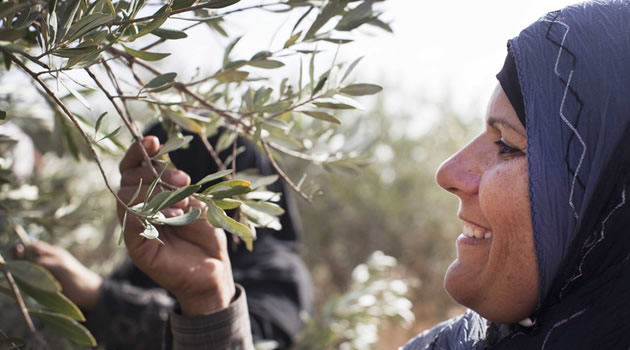
TEMPO.CO, Jakarta - The annual olive harvest, which finishes this week, is one of the most important events of the year for Palestinian farmers. It brings communities together and provides an income for around 80,000 families.


Yet olive farmers in the West Bank face enormous challenges. Their access to land, water and markets is often limited by Israeli settlements, checkpoints and access restrictions, all aspects of the Israeli occupation. But despite these challenges, olive farming has huge economic potential. The olive oil industry provides up to 14 percent of Palestinian agricultural income, and agriculture accounts for nearly 25 percent of GDP.


I went to Deir Istiya to meet some of the olive farmers there. Deir Istiya is a small village in the hills surrounding Salift in the central West Bank. It is famous for its olive groves.

Deir Istiya has a total area of 34,000 dunums. Approximately 6,000 dunums were designated as Area ‘B’ under the Oslo agreement in 1993. This means they are under Palestinian civil control, but the Israeli military controls security. The rest of the land, constituting 28,000 dunums, has been designated as Area C. This means that although it is in the West Bank, the government of Israel retains control of all aspects, including planning and security. In Deir Istiya, 83 percent of the total area is under Israeli government control, and the village is surrounded by seven Israeli settlements.


When we first reach the area we meet with Yaseen Abu Hijleh. He is 88 years old and one of the founders of the olive oil cooperative in Deir Istiya, started in 1976. Abu Hijleh told me about the olive press that the cooperative first bought. “Due to a lack of water we were only able to buy a half automatic press, which uses a lot less water than a fully automatic one. At the time it sounded amazing. We were the first village in Salfit area to possess an olive press.”


The cooperative has 150 members now and it has transformed the half automatic press to a fully automatic one.Mustafa Kokash, an olive farmer from Deir Istyia, shows me around the press. “For the fully automated press we have to buy water from Israel – each harvest it costs us about NIS6000,” he tells me. Shortage of water is a huge problem for Palestinian farmers, particularly in Israeli-controlled Area C, where Palestinians are rarely allowed to build new wells, pipes or cisterns. Between 1988 and 2013, Oxfam’s partner, Bimkom, reported that 94 percent of all Palestinian applications for construction in Area C of the West Bank were rejected.


Most of the farmers here have lost trees due to Israeli settlers. They have been burnt, uprooted or cut down – actions for which there is rarely accountability in Israeli courts. Since 2010 more than 60,000 olive trees have been lost in the West Bank. Farmers also face restrictions on their movements, especially in land near the settlements. To do anything to their trees they have to get a permit from the Israeli authorities.

Oxfam partner Yesh Din reports that 95 percent of crimes reported by Palestinians to Israeli police are closed, unresolved.

Mustafa told me: “Five months ago Israeli settlers cut down and burned 350 olive trees from my land near one of the settlements. These olive trees were three years old and were supposed to start producing olives next year. Buying them cost me NIS4500. If settlers did not uproot them and they reached their producing age they would have produced 150 kg of olive oil a year.”


In 2007 Oxfam started working with the Deir Istiya farmers’ cooperative. Ayoub Abu Hijleh, one of the programme officers for Oxfam, said: “we at Oxfam wanted to make the situation for olive farmers much better than it was at that time. Farmers here face their trees being uprooted and huge restrictions on when they could care for their trees.”

Oxfam and local partners run the ‘From Grove to Market’ programme, funded by the Swiss Government, which helps Palestinian farmers improve the quality and quantity of their oil and reach local and international markets. Oxfam gave the farmers training on how to take care of the olive trees, and introduced them to the best techniques in order to produce high quality olive oil and to increase the amount produced.

Oxfam also made it possible for Palestinian farmers to obtain internationally recognised organic olive oil certification. This opened up new markets in countries like the UK and France, helped them compete globally, and it increased their profits. At the moment there are 17 farmers in Deir Istiya in the process of getting their organic certification.


I met another farmer in Deir Istaya, Azzam Salman. Azzam, who is 41 years old, owns land near one of the settlements. He was given four days by the Israeli authorities to harvest it. “It is 20 dunums of land, and has almost 100 olive trees. It would need 15 days or more to harvest,” said Azzam. “In the early 1990’s, when these olive trees were cared for, they would produce 500kg of olive oil a year. Now the same trees produce only 40kg of olive oil. I can’t get to them to plough them or prune them.”

Azzam knows that the money he gets from the 40kg of olive oil is not much, but he still goes to harvest the trees to make sure he retains ownership of the land.


As I was leaving the village I couldn’t help but reflect on the immense changes these farmers have witnessed in their village. In one lifetime Deir Istiya has been surrounded by settlements, land has been confiscated and countless olive trees have been uprooted. I hope that the farmers here can one day harvest, prune and plough their trees without waiting for Israeli permits.

[Source: TEMPO.CO]

Tuesday, 24 November 2015

Millenarian olives in Malta

By Paul Portelli

The olive tree is a small evergreen tree that grows throughout the Mediterranean area and in parts of the world with a Mediterranean climate, including California, parts of South Africa and parts of Western and South Australia.


Olive trees are nowadays used to define the extent of the Mediterranean climate, which is characterised by relatively-hot dry summers and mild wet winters. Olive trees require 30 to 100 centimetres of rain falling mostly in autumn and winter. They do not survive if the ground freezes for more than a few days.

The wild olive tree is found in many parts of Africa and Asia, but its cultivation probably started thousands of years ago in the Eastern Mediterranean by the early Phoenicians.

Its cultivation was later introduced in other parts of the Mediterranean by the Phoenicians themselves, and eventually by the Greeks.


There is no record of when olive trees were first introduced in the Maltese islands. They were present during the Roman period when olive estates existed such as the one at San Pawl Milqi in Burmarrad.

They were here also during the Arab period, as can be confirmed by a number of Semitic place names such as Żebbuġ in both Malta and Gozo, Żejtun and Birżebuġa.

An olive tree takes 25 years to reach its full production, but after that it can continue producing olives for hundreds of years.

Trees over 1,000 years old are not uncommon. A number of olive trees in Malta are estimated to be between 600 and 1,000 years old.


Most of the trees that grew in the Maltese islands were cut down, either for firewood or more likely to make way for new crops such as wheat and cotton.

It is only recently that olive trees started to be planted again in the Maltese islands, and as many of them are still young it will be several years before they will reach full production.

Olives play an important role in both the landscape and diet of Mediterranean culture. The tree and its fruit and products feature in myths and legends of many Mediterranean cultures, but if such stories ever existed in Maltese culture they disappeared when the trees were cut down.

[Source: Times of Malta]

Monday, 23 November 2015

Of olives and oils

By Tee Shiao Eek

FROM the proverbial olive branch grows a small green (sometimes black) fruit. The essence of this fruit is in the oil, a pungent liquid of light green-golden colour, with a reputation that spans generations and cultures.


In ancient times, olive oil was revered as a gift of the gods, for people to use as food, lamp fuel, medicine, aphrodisiac and cosmetic. Today, olive oil has shed its mythical status, but it is no less important in the modern diet.

“Olive oil is the only vegetable oil that can be consumed as it is” without further processing or refining, says Dr Yahya R. Laleli, founder of Laleli Olive Oil, who hails from Turkey, where olive groves dotting the landscape are a common sight.

The olive tree is native to countries that lie along the coast of the Mediterranean Sea, including France, Italy, Spain, Morocco, Greece and Egypt.

“Olive oil is rich in monounsaturated fatty acids,” explains Dr Yahya, as well as contains omega-6 and omega-3, essential polyunsaturated fatty acids that can only be obtained from the diet.

While the monounsaturated and polyunsaturated fats play the lead roles in olive oil’s success story, there are also other beneficial compounds like beta-carotene, vitamin E, sterols and polyphenols, which contribute to the other effects of olive oil.

Health benefits

When it comes to the health benefits of olive oil, Dr Yahya, a solemn man who chooses his words carefully, comes as close as he ever will to gushing, during a recent talk organised by the National Heart Institute.

The most well known effect of olive oil is on heart health. Dr Yahya attributes it to the high oleic acid (a type of monounsaturated fat) content, which lowers “bad” LDL cholesterol while maintaining “good” HDL cholesterol.

He also quotes a study carried out by researchers from the Faculty of Medicine Timone in Marseille, France. The study, which was published in the American Journal of Clinical Nutrition, examined the diets of 212 volunteer subjects, all of whom had a moderate risk for heart disease.


“To investigate the value of a Mediterranean diet, subjects were split into two groups, one to consume a low-fat diet and the other to take a Mediterranean diet (rich in whole grains, fruit, olive oil, vegetables and red wine),” says Dr Yahya.

“Results found that those who had taken the low-fat diet reported a drop in cholesterol of 4.5%. The group who had consumed the Mediterranean diet had a cholesterol reduction of 7.5%,” which he explains is translated into a 15% reduction of heart disease risk.

Olive oil is also believed to protect against cancer, including breast, colon and prostate cancer, although there are no definitive studies that prove this, or demonstrate the mechanism of action.

Dr Yahya suggests that olive oil has a protective effect on age-related cognitive decline, and may even play a role in increasing longevity.

“A calorically-restricted diet – that includes all nutrients but has 30% fewer calories – has been found to extend the lifespan of rodents by 30 to 50%. Scientists hope, but do not yet know, whether the same will be true in people.

“One class of chemicals found to mimic calorie restriction is flavones, found abundantly in olive oil,” he explains.

Compared to other vegetable oils, olive oil ranks among the highest in terms of monounsaturated fatty acids, but loses out in the polyunsaturated fatty acids category.

However, Dr Yahya maintains that olive oil has the advantage, as it can be consumed as it is without refinery. Other oils have to undergo refinery, where the other benefits from the seed or plant, including plant sterols and phenolic compounds, are lost in the process.

Prized virginity

The quality of olive oil is measured by its “virginity” – in other words, whether the oil was extracted from the fruit without any chemical treatment or refining, which may lead to alterations in the oil.


As a result, you have extra virgin, virgin and pure (a blend of refined and virgin) olive oil. Interestingly, the level of virginity does not only refer to the oil’s physical characteristics, but also affects its beneficial properties.

For example, extra virgin olive oil is now known to have similar anti-inflammatory activity to the painkiller ibuprofen. The anti-inflammatory properties are due to a compound called oleocanthal, which is what produces the stinging sensation at the back of the throat when you consume extra virgin olive oil.

The discovery is said to be significant because scientists believe that inflammation plays an important part in a variety of chronic diseases like stroke, heart disease, and breast and lung cancer.

Even our senses can give us a clue to which olive oils are more beneficial. The organoleptic characteristics of olive oil, as perceived by our sense of smell and taste, are used to grade the quality of the oil.

“Mild bitter, pungent, fresh, aromatic and fruity tastes are some of the desirable traits associated with good organoleptic qualities. On the other hand, tastes of strong bitter, earthy, rancid or flat are undesired and are signs of inferior quality oil,” explains Dr Yahya.

Virgin and extra virgin olive oil have more organoleptic benefits, which translates into more health benefits.

In the end, the best olive oil is one that suits your taste and cooking style. If you are a “virgin” to cooking with olive oil, start with a mid-range “multi-purpose” oil and let the flavour transport you to the Mediterranean coast!

[Source: The Star]

Wednesday, 18 November 2015

Taste of Tuscany: Under the Olive Tree in Virginia offers gourmet oils and vinegars

By Martha M. Boltz

Tysons Corner Mall, just outside of Washington, DC in Virginia, is an over-crowded mecca of cookie-cutter stores, all looking alike, until you come upon this little bit of Italian culinary heaven.

On the lower level, basically between L.L. Bean and Nordstrom, stands the quaint little store, Under the Olive Tree, a gourmet cook’s delight with enough variety to suit the rest of us cooks as well.


Photo: An olive orchard in Umbria, Italy


Technically the shop bills itself as “a purveyor of Ultra Premium Extra Virgin Olive Oils and Balsamic Vinegars from around the world,” and a listing of them would exceed our word limit. Each oil is ready for tasting by turning the spigot of one of the large urns and letting a small sample to flow into a little paper cup.

Presided over by Marcel Beraud, his wife Fabiana and their lovely daughter, Marie Claire, the shop exudes a wonderful scent, a treat in itself as you wander around.

The oils come from various parts of the world such as Tunisia, Italy, Spain, Argentina, and more. On site at each plantation is a mill that starts the oil-making process from freshly picked green olives.

It’s a special process rapid enough to capture the freshest flavor as well as the highest quantity of health benefits. All olive oils are pressed cold and come from either natural or certified organic trees, producing the finest flavors.

Balsamic vinegars are also featured, with every flavor and concoction of tastes imaginable. My first selection was a dark chocolate flavored balsamic, which added a warm flavor to a salad caprese that is quite rewarding.

I also picked up a Chipotle EVOO, since spicy oil sounded delicious, and it was added to fresh pasta. The next visit I opted for a Basil EVOO, again a pleasing greenish taste.

In addition to the variety of oils and vinegars, a number of excellent pastas are available, all made in Virginia. I have a Red Pepper Fettuccine awaiting its taste test. For those who favor Mexican food and love chimichurri, small packets of a great chimichurri mix are available, which is spicy but very good.

There are other special spices presented with my personal favorite being a bottle of Black Truffle Sea Salt. While the tiny black flakes are easily seen, you have only to remove the top to catch the easily defined truffle flavor. A pinch of it in béchamel adds a definite spark!

Special tastings are frequent, usually on weekends. White Truffle Week started on January 11 will continue through Jan. 18 at 12:45 p.m.

Owner Beraud told me there are 24 flavors of balsamic vinegars, and 11 fused and infused EVOOs as well as four special oils, something for every palate.

When visiting Tysons Corner Mall, be sure to go down to the lower level and check out this relative newcomer inspired by the flavors of Tuscany. I guarantee you’ll be back for a return visit. The Berauds are friendly and helpful and the stock is outstanding. Their web site is found at www.undertheolivetree.net

Buono appetito!!

[Source: The Washington Times]

Friday, 13 November 2015

Destroying a symbol of life

By César Chelala


During the last few years, Palestinian olive trees, a universal symbol of life and peace, have been systematically destroyed by Israeli settlers. “It has reached a crescendo. What might look like ad hoc violence is actually a tool the settlers are using to push back Palestinian farmers from their own land,” a spokeswoman for Yesh Din, an Israeli human rights organisation monitoring incidents in the West Bank, previously stated.


The tree and its oil have a special significance throughout the Middle East. The olive tree is an essential aspect of Palestinian culture, heritage and identity, and has been mentioned in the Bible, the Qur’an, and the Torah. Many families depend on the olive trees for their livelihood.


Olive oil is a key product of the Palestinian national economy, and olive production is the main product in terms of total agricultural production, making up 25% of the total agricultural production in the West Bank. Palestinians plant around 10,000 new olive trees in the West Bank every year. Most of the new plants are from the oil-producing variety. Olive oil is the second major export item in Palestine.

For the last 40 years, over 1m olive trees and hundreds of thousands of fruit trees have been destroyed in Palestinian lands. The Israel Defence Forces have been accused of uprooting olive trees to facilitate the building of settlements, expand roads and build infrastructure. The uprooting of centuries-old olive trees has caused tremendous losses to farmers and their families. At the same time, restrictions to harvesting have come through curfews, security closures and attacks by settlers.


The uprooting of olive trees by the Israel Defence Forces and by settlers are done to protect the settlers, since they are supposedly used to protect gunmen or stone throwers. “The tree removals are for the safety of settlers… No one should tell me that an olive tree is more important than a human life,” declared an IDF army commander, Colonel Eitan Abrahams.

“As a result of the attacks on farmers by the IDF and by settlers, the farmers can’t get to their lands and work them. The settlers chase the farmers, shoot in the air, threaten their lives, confiscate their ID cards and damage the crops,” stated B’Tselem, an Israeli human rights organisation.

Practically not one of the complaints filed during the past several years on damage to Palestinians trees in the West Bank resulted in an indictment. The toll includes thousands of trees from several areas from Susya in the southern Hebron Hills to Salem in northern Samaria.


Last April, Israeli settlers from the Immanuel settlement uprooted some 450 olive trees and saplings from lands in Deir Istiya, northern Salfit. This followed the uprooting earlier of 120 olive trees in Wadi Qana. Since 1967 some 800,000 olive trees have been uprooted by Israeli forces and settlers in the occupied West Bank, according to research from the Palestinian Authority and the Applied Research Institute Jerusalem. This has threatened the livelihood of 80,000 families.

In a review he wrote on this issue, Atyaf Alwazir, a young Muslim American, stated that the uprooting of trees from Palestinian lands violates the Paris Protocols, The Hague and Geneva Conventions and the Covenant on Economics, Social and Cultural Rights.

According to Sonja Karkar, founder of Women for Palestine in Melbourne, Australia, uprooting olive trees is contrary to the Halakha (the collective body of Jewish religious law) principle whose origin is found in the Torah: “Even if you are at war with a city… you must not destroy its trees.”

To some Jewish activists’ credit, however, many of them are collaborating in the planting of new olive trees, to replace some of those uprooted by the Israeli settlers. On several occasions Rabbis for Human Rights donated saplings to Palestinian communities affected by the uprooting.


What do settlers actually want? To continue destroying Palestinians’ livelihood with impunity? To create a barren land, unfit for trees and people? To intimidate, terrorise and punish those who resist this tactic? Perhaps they should be reminded of A. E. Housman’s verses:

Give me a land of boughs in leaf,
A land of trees that stand;
Where trees are fallen there is grief;
I love no leafless land.

Dr. César Chelala is an award-winning writer on human rights and foreign policy issues.

[Source: Daily News Egypt]

Thursday, 5 November 2015

New Neighbors: Carter & Cavero Old World Olive Oil Company

We had a few questions about this new store, and Carter & Cavero Old World Olive Oil Company was kind enough to take a few minutes to respond. Below are the responses.

1.) The cornerstone of your store is olive oil, clearly. Why olive oil? What’s so special?


In our travels, we had visited olive oil producing regions of the world where we tasted amazing extra-virgin olive oils. We realized how olive oil added incredible taste and goodness to any meal and our passion for olive oil grew out of these experiences. We wondered why it was so difficult to obtain these extraordinary extra-virgin olive oils in the U.S. Hence, our vision for Carter & Cavero was to create a place where people could taste these olive oils that we had come to love but which had not been available in this country until recently.

2.) The name of the store uses the words “old world’’ as a description. What do you mean by that?

Extra-virgin olive oil is the first, cold-pressed juice of the olive with no additives or heat applied during the milling process. Although today’s modern techniques and machinery have improved the quality of olive oil and made the milling process less labor intensive, the basic principles of cold pressing freshly picked olives to obtain fresh olive oil remain the same as they have been for thousands of years. We always seek out and strive to bring to our stores the freshest olive oils that are produced in a manner consistent with these “Old World” traditions.

3.) What makes this store unique?


We are a tasting store that specializes in extra-virgin olive oils and balsamic vinegars from around the world. Our stores are interactive, educational and fun. When a customer first enters one of our stores, an associate is there to guide the customer through the varieties of olive oils and balsamic vinegars. Many of our products, such as our handmade ceramics from Spain are sold only in our stores here in the U.S. Sharing this experience with our customers is what makes us unique and interesting.

4.) Do your customers, or potential customers, have access to your store, to peruse or purchase online and do you use any social media?

We have an online store where people can purchase our products and have them shipped to their homes. We are active users of social media such as Twitter and Facebook. Guests can also visit our website to sign up for our newsletter that keeps them abreast of new recipes, events and sales. Our webstore is also a great place for businesses to shop for corporate gifts and a place for brides to shop for olive oil and vinegar wedding favors. We were recently voted Best of Weddings 2013 by the Knot, the internet's most-trafficked wedding planning website.

5.) When considering a location for the store, why did you choose Wall Township?

Wall Township lies in a part of Monmouth County that’s very near and dear to the Carter & Cavero families. Two of the owners were born and raised within walking distance of our Sea Girt Square store. Wall Township is an ideal place for people that live in the area and for those who love to visit the Jersey Shore. We could not think of a better location than Wall Township.

Carter & Cavero Old World Olive Oil Company
Manager: Barbara Guerra
Address: 2100 Hwy 35, Wall, NJ 08750
Hours: Monday, Tuesday, Wednesday & Friday: 10 a.m. to 6 p.m.
Thursday: 10 a.m. to 7 p.m. Saturday: 10 a.m. to 5 p.m.
Sunday: 11 a.m. to 5 p.m.
Phone: (732) 449-0044
Email: info@carterandcavero.com
Website: www.carterandcavero.com
Facebook/Twitter/social media: facebook.com/carterandcavero ; twitter.com/CARTERANDCAVERO

[Source: Wall Patch]

Tuesday, 3 November 2015

The island making Japan’s best olive oil

By NANCY SINGLETON HACHISU

When I first married, I stocked the pantry with a can of affordable Spanish olive oil sourced through a friend. But as time meandered along and finances became more secure, I began to buy better quality oil, until I was using an organic variety procured at our local flea market. Somewhere along the line, I also purchased a bottle of high-end Italian olive oil at an upscale Tokyo supermarket.


One spring day I found myself home alone fixing a solitary dinner. I harvested a few heads of the gorgeous red oak leaf lettuce I had planted from seed, mashed some garlic in a mortar with a few pinches of Japanese sea salt, added some ground Tellicherry black pepper and splashed in my homemade red wine vinegar. What olive oil did I reach for to finish it? The high-end Italian.

Using such an oil on a beautiful salad is not hard to grasp for any of us who care about what we are eating. However, using a pricey oil on everything — including sauteed foods — is more of a stretch for most. The expense adds up. Nonetheless, I found that the tastes of our simple field vegetables were greatly elevated once sauteed in the better oil (with Japanese sea salt).

Olive oil is not the first thing that comes to mind when talking about Japanese ingredients. Yet Shodoshima, an island in the Seto Inland Sea is home to thousands of olive trees. “Olive island,” as it is known, has been producing Japanese olive oil since 1908.

While I did buy some of Shodoshima’s olive oil at a food event 15 years ago, Japanese olive oil slipped off of my radar in the intervening years. But recently I have found myself traveling to Shodoshima to explore its strikingly delicious native olive oils such as Olive no Mori produced by Shodoshima Healthy Land and Takao Olive Farm’s Takao Nouen no Olive Hatake. Admittedly expensive, these oils have been garnering gold medals in prestigious competitions such as the Los Angeles County Fair (Olive no Mori) and the New York International Olive Oil Competition (Takao Nouen no Olive Hatake).

What sets these oils apart is the small scale of their production, their location on Shodoshima, the care that goes into the trees themselves and, of course, the blending of the olives after pressing.

Touching the bark of Olive no Mori’s 1,000-year-old olive tree that overlooks the Seto Inland Sea, I felt the power of the ages. Although the president of Healthy Land transplanted the tree here in 2011 from Spain, the tree symbolizes the deep historical roots that lie behind the ancient food culture of olive oil. We stand under its spreading branches while Atsuhiko Utsumi, an olive tree expert, gently shakes the branches to dislodge residual flowers that did not become tiny olive buds. This operation relieves the tree from the job of trying to extricate them itself, akin to deadheading rose bushes. The tree can thus focus its energy on growing flavorful olives rather than sloughing off unneeded dead flowers.

“Things that grow in the field become happy if you touch them,” says Utsumi.

While I did not visit Takao Olive Farms, I spoke with its owner, Toyohiro Takao, at an olive oil dinner in Tokyo. A slight man, he has a gentle demeanor that comes through in his olive oil. I was also taken with what he says about his trees.

“Each tree has a different personality and when I walk among them I compliment them, ask them how they are feeling, bid them good morning,” he says. Again, the personal touch here is key. Nonetheless, sold in precious 64-gram bottles for about ¥2,000, the Takao Nouen no Olive Hatake olive oil is not for everyday use — or for everybody.

As a writer of Japanese cookbooks, I have always recommended using rapeseed (canola) oil for most dishes, but since visiting Shodoshima during the past six months, I have begun using olive oil often when preparing dishes for Japanese food events. The fruity, sometimes spicy character of the oil lends character to the kind of farm food that I tend to serve. A good olive oil holds up to the strong flavors of soy sauce and fish sauce and enhances those two seasonings. However, I would not pair it with miso, which has an unctuous flavor profile like olive oil, but one at the opposite end of the spectrum.

So what exactly constitutes a “good” olive oil? It goes without saying that extra virgin olive oil is the oil of choice. Extra virgin means an oil has been produced by pressing whole olives to extract the oil without heat or chemicals. Otherwise, good olive oil should be clear, bright and, well, drinkable.

On two different visits to Shodoshima we made our way to Shimayado Mari, an inn that successfully infuses traditional living with modern comforts. Dinner there culminates with a pot of olive rice cooked in an Igayaki donabe earthenware pot, which yields the coveted crunchy rice at the bottom of the pot called okoge. The olive rice is served with a drizzle of Takao Nouen no Olive Hatake or Olive no Mori olive oil and a pinch of local salt. It’s heavenly.

Shodoshima Healthy Land’s Olive no Mori, 0120-11-7677. For more information, visit www.healthyolive.com.
Takao Olive Farms’ Takao Nouen no Olive Hatake, 050-3673-9320.
For more information, visit www.takao-olives.com.

[Source: The Japan Times]

Friday, 9 October 2015

ULM professor awarded more than $420,000 to develop olive-based cancer inhibitor

The National Institutes of Health awarded Khalid El Sayed, associate professor of pharmacy at the University of Louisiana at Monroe, $420,520 for his research project, “Design of novel c-Met inhibitors inspired by olive phenolics.”


Khalid El Sayed, associate professor of pharmacy at the University of Louisiana at Monroe, was awarded $420,520 for his cancer-related research project. / University of Louisiana at Monroe


ULM President Nick Bruno said, “I am very proud of Dr. El Sayed and what he has accomplished thus far. The continuation of these kinds of grants will further build his reputation as a researcher. This also signifies the importance of our College of Pharmacy and its relevance to the state, the region and the university as a whole.”

The research project will use a natural compound found in extra virgin olive oil and other related natural compounds as possible dietary supplements to control breast cancer and to enhance the therapeutic effects of current anticancer drugs.

"Dr. El Sayed continues to have success in the area of cancer therapeutics discovery and development from natural products," said Benny Blaylock, Dean of the College of Pharmacy. "The information from this research will add important information for use in both treatment and prevention of breast and prostate cancer. The College of Pharmacy is very proud of the research being done by Dr. El Sayed and other members of the Department of Basic Pharmaceutical Sciences."

The research is derived from studies focused on the eating habits and disease occurrence of those living in the Mediterranean, El Sayed said.

“Nature is still the single most important drug source,” said El Sayed. "About 75 percent of today’s anticancer drugs are natural products or based on natural origin. The Mediterranean diet includes extensive use of olive oil in its ingredients, which correlates to lower incidences of cardiovascular disease, age-related cognitive disease and cancer.”

The project also includes the use of computer software to make new synthetic compounds similar to the olive-derived compounds. The synthetic compounds will have significant improvement in anticancer activity, El Sayed said.

“These compounds showed activity against several metastatic prostate and breast cancers,” said El Sayed. “The proposed research will develop novel c-Met—an important enzyme for several metastatic tumor types—and cancer inhibitors for future pre-clinical and clinical studies.”

El Sayed explained his expectations for the project. “Our long-term goal is to utilize the ability of olive oil to inhibit the activation of the c-Met enzyme and use it as a dietary supplement to synergize the effects of chemotherapeutics.”

El Sayed continued, “This project would not have been successful without the thoughtful contribution, support and hard work of collaborators and graduate students from the ULM College of Pharmacy. Faculty members of the ULM College of Pharmacy believe they have the talent, persistence, skills, experience, and knowledge to achieve the establishment of a 'Louisiana Drug Discovery Center' in collaboration with other Louisiana institutions. This success is a step forward towards this direction.”

While at ULM, El Sayed has received $1,180,000 in research support from Louisiana Biomedical Research Network, Philip Morris, the American Society of Pharmacognosy, the American Foundation for Pharmaceutical Education, and several small companies. He has also received $278,000 from the Louisiana Board of Regents for equipment funding. In collaboration with his pharmacy colleagues, El Sayed has been awarded three U.S. patents for cancer research. He has taught at ULM since 2001.

[Source: The News Star]

Monday, 5 October 2015

Herb-infused olive oil: Tasty and easy to make

By: George Noleff, newsnet5.com

CLEVELAND - It is the middle of winter. The skies are gray. It is cold. There is snow on the ground. You need a break. You might not be able to travel to a sun-drenched, happy place, but you can create one in your kitchen. All you need are a few basic ingredients and a taste for the Mediterranean to make herb-infused olive oil at home.

What you will need:

1 Quart Extra Virgin Olive Oil


Few Ounces Dried Herbs (Any herb or combination of herbs you prefer like oregano, rosemary, thyme, etc.), preferably on the stem

That is it. Not a long ingredient list, right?

To start, pour your oil into a medium saucepan. Gently heat the oil, but be careful not to heat it above 115 degrees F. Place half of your herbs in the oil. Immediately turn off the heat and let the herbs steep for at least 20 minutes.

Next, strain the oil through a fine sieve and into a container. You can use any spare bottle, jar, or even plastic container. Then, add the rest of your herbs to the oil, and cork it or close it.

The longer you wait to use your infused oil, the more intense the herb flavor will be. One note of caution, make sure you use only dried herbs. Fresh herbs hold water, and water can harbor botulism and other bacteria. The same goes for garlic, lemon, and other fresh vegetables and fruits.

If you do want to add those, keep the oil refrigerated and use it within a week.

Need some ideas for how to use the oil?


Of course, you can use it to make dressings and vinaigrettes. You can also use it as a bread dip. It is also great on toast or crostini. Just sprinkle a little on a slice of bread and put it under the broiler or in the toaster oven. Use it to cook with. It will add zest to scrambled eggs. Toss it with a little parmesan cheese and pasta. Use it as a finishing sauce on roasted meat, chicken, and fish. There are plenty of ways to use it, and to add a little Mediterranean summer to your winter.

[Source: News Channel 5]

Wednesday, 23 September 2015

Custom olive oil and balsamic vinegar creations dazzle at downtown specialty store

By KRISTIN FARLEY

KNOXVILLE (WATE) - A unique shop with its own tasting bar is taking off in downtown Knoxville.


But we're not talking wine tasting. Instead, olive oil and balsamic vinegar are on tap, so customers can make and take home their own creations.

"Our philosophy is to bring high-quality ingredients that don't take a lot of preparation to the table to make the most boring food taste yummy and healthy," said Terri Karlsson, owner of The Tree and Vine.

Karlsson and her husband Paul opened The Tree and Vine on Union Avenue six months ago. Their main staples are estate olive oil and aged balsamic vinegar.


"He is actually in Greece harvesting the olives as we speak," Karlsson said of her husband when we stopped by the shop. "I spoke to his brother on the phone."

She and her husband know exactly where all their products come from. They store the oil in authentic fustes to help retain the quality of their product and they encourage customers to taste and create what suits their individual pallets.

"You want to always start with olive oil, because once you've tasted the balsamic, it sort of, our pallet is done for the day," she said. "It is hard to go backwards."


Best of all, customers are encouraged to make their own creations, meaning everyone can walk away with their own personal bottle or a unique gift.

"We want you to come in when you are a little bit hungry," she said. "Don't come in and say, 'I don't want to taste anything.' That's like, forget it."

Coming to the store is definitely an experience and the owners also have a lot of knowledge to share from their time overseas.

"Unfortunately most of what you buy in the grocery store that says extra virgin oil is not in fact extra oil. It is not regulated by the FDA," she said.

The store also sells high-end cookware, wine carriers and marinara sauce made from their own recipe.

Karlsson says downtown Knoxville needed a cookware store and they hope to be filling the void.

In fact, for the North Carolina couple, coming to Knoxville was no mistake.


"We were recruited. The developer of this space on Union Avenue approached us. Think they talked to folks at Tupelo Honey and they said go talk to these people," Karlsson said.

And in the end, she said one trip here and she was hooked.

"Knoxville is kicking it. The people in Asheville are very jealous."

The Tree and Vine's other shop is in Biltmore Village in Asheville. They now have homes in both cities.

[Source: World Now and WATE]

Thursday, 17 September 2015

How to Grow Olive Trees From Pits


The olive tree, or Olea europaea, is a species of small tree native to the eastern Mediterranean region. Growers in this area cultivate olives trees commercially for the oil in the olive fruit.

Olive trees do not grow true from seed, so olive trees propagated in this manner may produce smaller olives than the cultivated varieties. Olive trees require warm weather throughout the year, so gardeners in the United States typically grow them in containers.

Olive Tree Seed Germination By Bridget Kelly

How to Plant an Olive Pit By Bridget Kelly

How to Grow Olive Trees From Pits By James Marshall

If I Plant an Olive Pit, Will It Grow a Tree? By Peter Mitchell

Monday, 1 June 2015

The Olive Oil Source Introduces New Organic California Blend Extra Virgin Olive Oil

The Olive Oil Source, the industry leader in olive oil-related products, today introduced a new Organic California Blend Extra Virgin Olive Oil now available on their Wholesale (http://wholesale.oliveoilsource.com) and Boutique (http://boutique.oliveoilsource.com) websites. The new offering is the latest addition to their extensive product line of extra virgin olive oils, organic and flavored oils, and vinegars.


The Olive Oil Source today announced a new Organic California Blend Extra Virgin Olive Oil now available on their Wholesale and Boutique websites in a full variety of sizes from 2-ounce samples to full gallon options. The new offering is the latest addition to their extensive product line of extra virgin olive oils, organic and flavored oils, and vinegars. Grown under strict organic regulations certified by the CCOF (California Certified Organic Farmers), the Organic California Blend Extra Virgin Olive Oil provides a high quality, authentic and domestically sourced option for wholesale customers and consumers alike.

An exciting new addition to the line, the Organic California Blend Extra Virgin Olive Oil is produced exclusively for The Olive Oil Source. It is grown in a region well-known for its excellence in olive oil production under strict, CCOF organic regulations. As chefs and consumers alike seek regional products meeting high standards of excellence, the Organic California Blend Extra Virgin Olive Oil introduces customers to a high quality oil that has been blended to match a milder flavor profile, perfect for everyday use.

“Our new Organic California Blend Extra Virgin Olive Oil provides a smooth, mild blend of the highest quality extra virgin olive oil. Without the signature bitterness or pungency of stronger flavored oils, it can be used everyday and at every meal, ” said Antoinette Addison, Vice President, The Olive Oil Source.

“Our latest product expands the full range of olive oil and vinegar products available from The Olive Oil Source to more than 100 different blends and flavors. We continue to receive requests for organic products that provide the perfect combination of high quality, authentic oil with a mild, fruity profile. More and more consumers are looking for healthy options that can easily fit into their everyday menus,” Addison remarked.

Latest Addition to the Wholesale Private Label Program

The new organic product is also the latest addition to the company’s simplified wholesale private label shiner program, designed to provide specialty food retailers and marketers with immediate availability of a full range of oils and vinegars and rapid turn-around production.

At the foundation of the program is the ability to create custom “shiners”, or unbranded bottles of olive oil or vinegar through a simplified online process. Similar to the wine industry’s approach to bottling wine for later rebranding, the new program includes more than 100 olive oils and vinegars to choose from. A wide variety of bottle styles and sizes provide complete flexibility to the customer. Online pricing and ordering make this an industry exclusive, bypassing the typical “call us for more information” sites that hint at the service without providing detailed information upfront.

Another significant advantage of the program is its low minimum case requirements, allowing customers to conduct their own in-store tests with flavor and sizing options. The program presents a perfect opportunity for olive oil tasting bar entrepreneurs and specialty food store owners to fine-tune their own product offerings to fill in the product line gaps or present a cost-effective self-branded option to their customers.

About The Olive Oil Source

The Olive Oil Source is internationally recognized as the most comprehensive resource for olive oil-related products and information about olive oil. Producers seeking information on the latest commercial equipment, retailers looking to source extra virgin olive oil products, and consumers interested in learning answers to simple questions like “what is olive oil?” as well as detailed information about health and beauty trends in extra virgin olive oil will find “Everything but the Olive” at The Olive Oil Source.

Founded in 1998, The Olive Oil Source is owned and operated by Shawn and Antoinette Addison who have graduate education degrees in agricultural sciences and economics from Ecole Nationale d’Agronomie in France and from Stanford University and manage their own organic olive orchard in the Santa Ynez valley of California. They are among a select group of industry experts able to provide customers with information and products based on both current research and field experience. For more information about The Olive Oil Source, visit us at http://www.oliveoilsource.com

[Source: SFGate]

Monday, 8 April 2013

Bersih 2.0 makes public caretaker guidelines

Caretaker government. Ini cadangan ker soalan? This is a suggestion or question? #PRU13 #GE13 #NotLevelPlayingField


[More picture like this: HERE]

Friday, 11 January 2013

Preservationists may use olive oil to protect English church from acid rain


Marinating a church in olive oil

Looming high over the city of Christendom, England, the York Minster church has survived a lot throughout its history including wars and fires. But now it's facing another battle: acid rain. Until now, preservationists have struggled to find a way to protect the church. Now they may have discovered a solution that is found in most kitchens.

Live Science reports that preservationists are turning to olive oil to save the church, and other structures like it. The York Minster is made of limestone, which makes it vulnerable to acid rain. Dr. Karen Wilson, a chemist at Cardiff University in Wales, tells NPR that olive oil contains oleic acid, which can bind with the stone and protect it.

Preservationists are using a limestone sample to look at the long-term effects of using olive oil on the stone.

[Source: abc2news.com]

Related:

Thursday, 10 January 2013

Bekaa farmers hit as olive oil revenues fall

By Rakan al-Fakih


Olive farming in Lebanon is still very labor intensive and machines are rarely used.


HERMEL, Lebanon: While the north Bekaa might not be among Lebanon’s top olive oil producing areas, farmers in the area say their newly planted cash generating crops are no longer yielding profits.

Like many farmers in the area, Hassan Allam said Hermel farmers started planting olives hoping that their ability to store oil and its relatively high price would help improve income.

“High fuel prices, labor cost, middle men and competition from neighboring countries suggested olives would be a better crop,” he said. “But we were soon disappointed after produce started accumulating year after year.”

“I am stacking 250 [20 liter canisters] out of the 350 I produced this year,” said Hermel farmer Allam

To produce 1,250 kilograms of olives, Allam spent around LL12 million. He only expects to sell his produce for around LL10 million.

Hussein Chamas, head of the General Hermel Farmers Cooperative, said that olive farmers in the area are unable to sell the olive oil they produce, despite overall production falling to 25 percent of last year’s, when olive trees across the country were more productive.

Olives are highly cyclical crops with production varying from year to year, depending on weather conditions, particularly rainfall.

“Chaos reigns in olive oil trade and the government is failing completely to set standards and help farmers market their produce,” he said.

Out of 50,000 20-liter canisters bought last year by the Lebanese Army to help farmers, only 2,100 originated from Hermel, Chamas said, adding farmers have not been paid yet.

Khodor Jaafar, head of the Hermel Cooperatives Union, said high costs of production compared to neighboring countries are behind low sales.

“Olive farming in Lebanon is still very labor intensive and machines are rarely used. Oil imported from Syria can cost as little as LL50,000, while farmers here will make losses if they sell below LL120,000,” he said.

Export markets, Jaafar added, cannot be opened without lowering production costs while at the same time guaranteeing international standards.

Head of programs at the Agriculture Ministry Majida Musheik echoed Jaafar grievances, adding that local demand is not sufficient for the 40,000 tons of olive oil produced by Lebanon each year.

Musheik said the ministry has finalized a tender to provide cooperatives with olive harvesting machines to help lower costs. “But administrative barriers are behind delays in providing farmers with this equipment,” she added.

Labor costs amounts to 52 percent of olive production costs, she estimated.

But in Hermel many farmers say they have already given up on government initiatives to shore up the olive oil sector.

“I decided to start cutting down the olive trees this year, and I will cut them all if I fail to sell the stacked oil,” Allam says.

[Source: The Daily Star]